
neuro-science
Medical research: Human augmentation with robotic body parts is at hand, say scientists
Extra parts, from a thumb to an arm, could be designed to help boost our capabilities
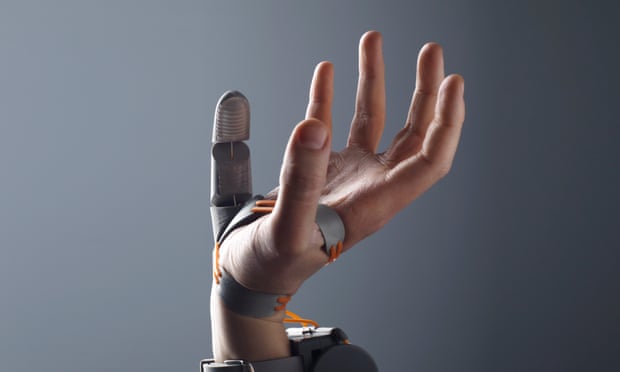
Whether it is managing childcare, operating on a patient or cooking a Sunday dinner, there are many occasions when an extra pair of arms would come in, well, handy.
Now researchers say such human augmentation could be on the horizon, suggesting additional robotic body parts could be designed to boost our capabilities.
Tamar Makin, a professor of cognitive neuroscience at the MRC cognition and brain unit at Cambridge University, said the approach could increase productivity.
“If you want an extra arm while you’re cooking in the kitchen so you can stir the soup while chopping the vegetables, you might have the option to wear and independently control an extra robotic arm,” she said.
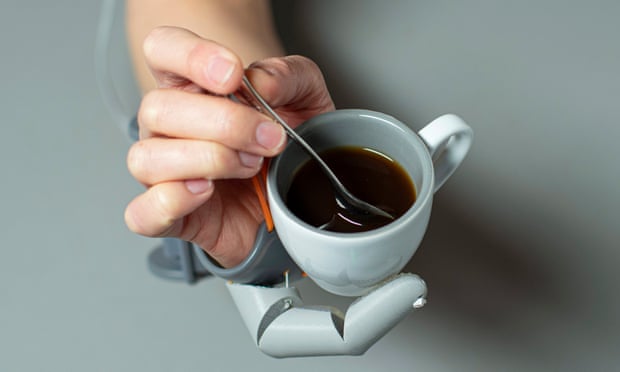
The approach has precedence: Dani Clode, a designer and colleague of Makin’s at Cambridge University, has already created a 3D-printed thumb that can be added to any hand. Clode will be discussing the device as part of panel on “Homo cyberneticus: motor augmentation for the future body” at the annual meeting of the American Association for the Advancement of Science (AAAS) in Washington DC on Friday.
Makin said the extra thumb could be helpful for waiters holding plates, or for electrical engineers when soldering, for example, and other robotic body parts could be designed for particular workplace needs. For example, extra arm could help a builder hammer a nail while holding a joist in place.
“We spoke with a surgeon [who] was really interested in holding his camera whilst he’s doing shoulder surgery, rather than his assistant holding his camera,” said Clode. “He wanted to be in full control of the tools that he’s using with the two hands whilst also holding that camera and being able to manipulate that as well.”
The team say robotic body parts could allow far more control than a simple mounted device, with their operation inspired by our natural mechanisms of agency. “We want something that we’d be able to control [very] precisely without us having to articulate what it is exactly that we want,” said Makin. Lire la suite »
 TANIKO Madagascar