
Record number of fossil fuel lobbyists get access to Cop28 climate talks
UAE-hosted summit admitted at least 2,456 people affiliated with oil and gas industries, analysis finds
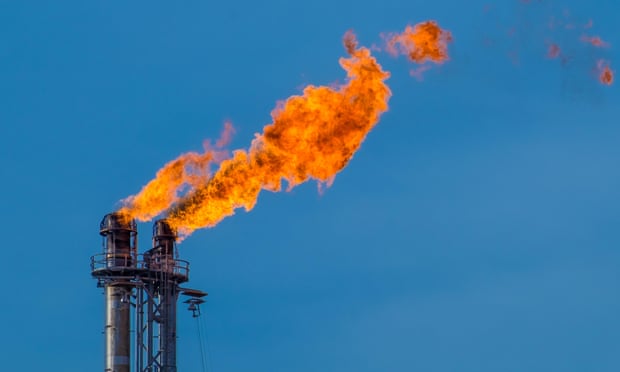
At least 2,456 fossil fuel lobbyists have been granted access to the Cop28 climate negotiations, according to an analysis.
The figure calculated by the Kick Big Polluters Out (KBPO) coalition is a record number that raises further questions about the fossil fuel industry’s influence over this year’s UN summit, which is being run by the president of the United Arab Emirates’ national oil company.
The scale of oil and gas influence in Dubai is unprecedented, with almost four times as many industry-affiliated lobbyists than the number registered for Cop27 in Sharm el-sheikh – which itself was a record year.
Lobbyists vying to push the interests of oil and gas companies such as Shell, Total and ExxonMobil outnumber every country delegation apart from Brazil (3,081), which is expected to run Cop30 in 2025, and the host country, which registered 4,409 attenders.
Fossil fuel lobbyists also outnumber official Indigenous representatives (316) by seven to one – another sign, say campaigners, that oil and gas industry profits are being prioritised over a sustainable planet and frontline communities.
Caroline Muturi, a coordinator the campaign group Ibon Africa, said: “These findings tell us that the dynamics within these spaces remain fundamentally colonial. Cops have become an avenue for these corporations to greenwash their polluting businesses and foist dangerous distractions from real climate action.”
The revelations come during another catastrophic year for the climate, with supercharged extreme weather events striking every corner of the world, from unprecedented rainfall in Libya, severe drought threatening the Amazon, and a sharp increase in heat deaths from Arizona to southern Europe.
Scientists say such destructive storms, drought and heat would have been almost impossible without the warming caused by burning fossil fuels, which must be phased out to avoid total climate breakdown.
Momentum to secure a commitment to phase out fossil fuels at Cop28 has been growing, especially among the most vulnerable countries, but many of the biggest polluting countries are holding out.
The irreversible loss and damage in developing countries is estimated by some studies to be greater than $400bn annually – and expected to rise – so time is of the essence.
Rachel Rose Jackson, a research director at Corporate Accountability, said: “If Cop28 doesn’t deliver a fossil fuel phase out, we know who to blame. We are angry, and we are over having to explain again and again why the fossil fuel industry should not be writing the climate rules.”
KBPO is a coalition of more than 450 organisations across the world calling for an end to fossil fuel companies’ influence in climate policy. After years of pressure for greater transparency, the UN caved and this year required applicants to declare who they represent, which may partly explain the rise in oil and gas lobbyists, as they may previously have attended previous Cops incognito.
The data on lobbyists was compiled by the organisations Corporate Accountability, Global Witness and Corporate Europe Observatory from the UN’s provisional list of about 84,000 participants at Cop28, and is the most in-depth study into fossil fuel industry presence at any talks to date. It found:
-
Fossil fuel lobbyists received more passes than the combined total of delegates (1,609) from the 10 most climate vulnerable countries combined, including Somalia, Chad, Tonga, Solomon Islands and Sudan.
-
Many fossil fuel lobbyists were granted access as part of a trade association, of which nine of the 10 largest came from the global north. This included the Geneva-based International Emissions Trading Association, which brought 116 people including representatives from Shell, TotalEnergies and Norway’s Equinor.
The sharp rise in industry lobbyists is perhaps unsurprising given recent revelations that the host country planned to use climate meetings with other countries to promote deals for its national oil and gas companies.
The Cop president, Sultan Al Jaber, was recorded claiming there was “no science” indicating that a phase-out of fossil fuels is needed to restrict global heating to 1.5C (2.7F) above preindustrial levels.
 TANIKO Madagascar