
cosmology
2024’s Biggest Breakthroughs in Physics
The year’s biggest breakthroughs in physics included evidence that dark energy may be weakening, the discovery of a supersolid, and new advances in quantum geometry
A generation of physicists has referred to the dark energy that permeates the universe as “the cosmological constant.” Now, the Dark Energy Spectroscopic Instrument (DESI) has produced the largest map of the cosmos to date — hinting that this mysterious energy has been changing over billions of years.
The Hubble constant: a mystery that keeps getting bigger
Scientists have found a discrepancy in estimates for the rate of expansion of the universe. Why is this and what does it mean?
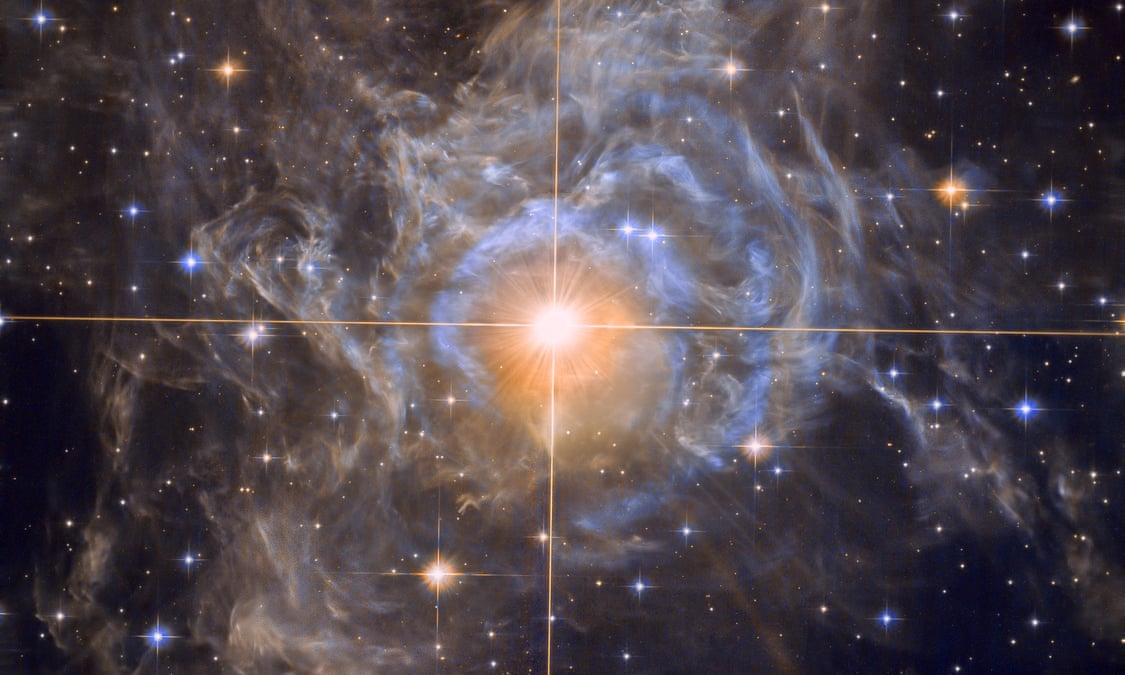
Astronomers have reached a fundamental impasse in their understanding of the universe: they cannot agree how fast it is flying apart. And unless a reasonable explanation can be found for their differing estimates, they may be forced to completely rethink their ideas about time and space. Only new physics can now account for the cosmic conundrum they have uncovered, many believe.
“Five years ago, no one in cosmology was really worried about the question of how fast the universe was expanding. We took it for granted,” says astrophysicist Daniel Mortlock of Imperial College London. “Now we are having to do a great deal of head scratching – and a lot of research.”
This view is backed by the US astrophysicist and Nobel prize winner Adam Riess, of Johns Hopkins University. “I think this issue has become a big deal. We were getting better and better at understanding the universe and yet the closer we have been looking, the more we have found there are all these mysterious components.”
Over the decades, these surprises have included the discovery of dark matter – believed to be made up of as yet undetected particles – whose extra gravitational pull explains why galaxies do not fly apart. In addition, astronomers have also discovered the existence of dark energy, which is accelerating the rate at which the cosmos is expanding.
“Those two discoveries were remarkable enough,” adds Riess who won his Nobel for his involvement in the discovery of dark energy. “But now we are facing the fact there may be a third phenomenon that we had overlooked – though we haven’t really got a clue yet what it might be.”
 TANIKO Madagascar