
Hajj
L’Arabie saoudite annonce 1301 morts pendant le hajj, la plupart des pèlerins non autorisés
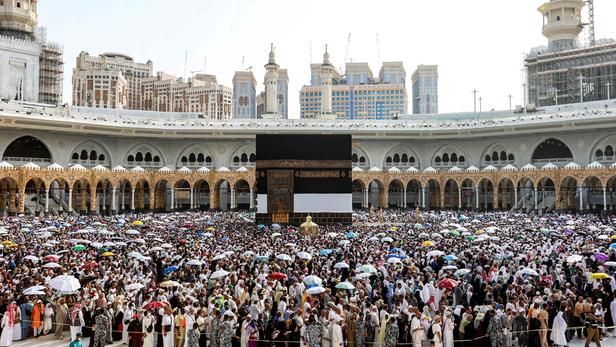
Un haut responsable saoudien a déclaré que «l’État n’a pas failli», mais qu’«il y a eu une erreur d’appréciation de la part de personnes qui n’ont pas mesuré les risques».
L’Arabie saoudite a annoncé dimanche la mort de 1301 pèlerins lors du grand pèlerinage musulman récemment tenu en Arabie saoudite sous des chaleurs caniculaires, précisant que la plupart n’étaient pas munis d’autorisations pour ce rassemblement annuel. «Malheureusement, le nombre de morts a atteint 1301, dont 83% n’étaient pas autorisés à accomplir le hajj. Ils avaient parcouru de longues distances sous le soleil, sans abri adéquat ni confort», a rapporté l’agence de presse officielle saoudienne SPA.
La semaine dernière, un décompte de l’AFP basé sur des déclarations officielles ou via des diplomates impliqués dans les recherches des victimes avait chiffré le nombre de victimes à près de 1100. Des diplomates de pays arabes avaient précisé que 658 étaient des Égyptiens, dont 630 dépourvus d’autorisation officielle pour le pèlerinage. Un grand nombre de décès est dû à la chaleur. Le hajj s’est tenu du 14 au 19 juin dans l’ouest du royaume. (…lire la suite)
What Just happened In Mecca SHOCKED the Whole World!
The whole of Saudi Arabia and the international community were recently thrown into shock as the holy city of Mecca became submerged due to heavy rainfall, resulting in the disruption of worship, displacement of pilgrims, locals and even animals, and destruction of properties. What is even more worrisome is the catastrophic result of this flooding. What caused this catastrophe, and how can future occurrences be avoided? Join us as we unravel the reason for the crises in one of the world’s most revered cities.
Saudi Arabia, home to Islam’s two holiest cities—Mecca and Medina—which draw millions of Muslims worldwide every year during the annual Hajj, has been seriously grappling with challenging climate patterns, from severe droughts to high temperatures, extreme dry conditions, air pollution, and worst of all, a rise in water level that has haunted the nation with flash floods, all of which come with their severe consequences. For context, let’s look at the factors that have shaped Saudi Arabia’s weather over time.
Une tempête de grêle biblique frappe l’Arabie Saoudite ! Le monde est sous le choc
The country’s geography plays a crucial role in determining its weather patterns. As we all know, Saudi Arabia is primarily arid, with vast desert areas like the Rub’ al Khali, also known as the Empty Quarter, which is one of the largest sand deserts globally. Moreover, Saudi Arabia has an extensive coastline along the Red Sea to the west and the Arabian Gulf to the east, and these coastal regions impact its weather patterns.
 TANIKO Madagascar