
JCPOA
Blinken says nuclear talks halted because Iran ‘doesn’t seem serious’
Secretary reiterates that US won’t allow Tehran to drag out negotiations while advancing with its nuclear program and that Washington will pursue other options if talks fail.
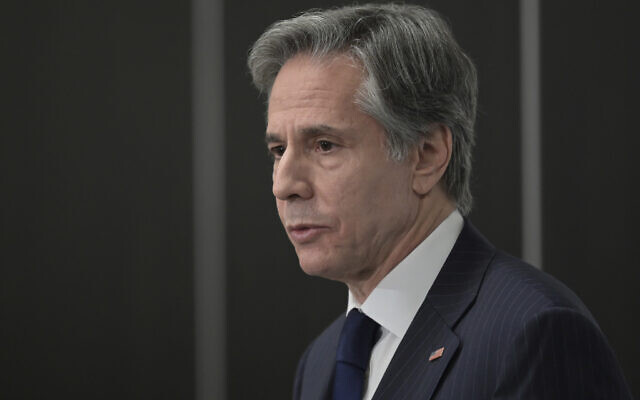
United States Secretary of State Antony Blinken said Friday that this week’s round of negotiations between world powers and Iran in Vienna was halted because Tehran does not seem to be serious about reaching an agreement with the US that would see a joint return to compliance with the nuclear agreement.
“What we’ve seen in the last couple of days is that Iran right now does not seem to be serious about doing what’s necessary to return to compliance, which is why we ended this round of talks in Vienna,” Blinken told Reuters.
The secretary of state said the US would now consult with its allies, including Israel, on how best to move forward. “And we will see if Iran has any interest in engaging seriously, but the window is very, very tight.”
Blinken also reiterated a warning Washington had made numerous times in recent months, that the Biden administration will not allow Iran to drag out the negotiation process — already in its seventh round — all while advancing its nuclear program. “If the path to a return to compliance with the agreement turns out to be a dead-end, we will pursue other options,” Blinken said, while declining to detail what those options are.
He also noted that the sides had made “real progress” in the first six rounds of talks that were held before hardline Iranian President Ebrahim Raisi entered office, leading to a major hiatus in the negotiations.
The latest round of talks began on Monday between the E3 (Britain, France and Germany), Iran, China and Russia, with the United States participating indirectly. The talks were paused on Friday afternoon, for diplomats to consult with their governments while they evaluated two drafts submitted by Iran that appeared to undo all of the progress of previous rounds.
There was no strategic debate on Iran under Netanyahu, ex-IDF intel chief charges

Israeli policy on Iran’s nuclear program over the last decade was decided personally by former prime minister Benjamin Netanyahu without consultation, the former head of Israel’s Military Intelligence indicated on Tuesday.
“The Iranian issue was privatized to one person,” argued Amos Yadlin, speaking at a panel at Reichman University’s Institute for Policy and Strategy conference in Herzliya. “The strategic discussions did not take place.”
He also said that the JCPOA deal of 2015 between Iran and six other countries including the United States kept the Islamic Republic from making meaningful progress in its nuclear program: “The mistake is not in 2015, but in 2018 when they leave the deal in its good years.”
Washington unilaterally reimposes UN sanctions on Iran despite opposition from UN Security Council members – including US allies
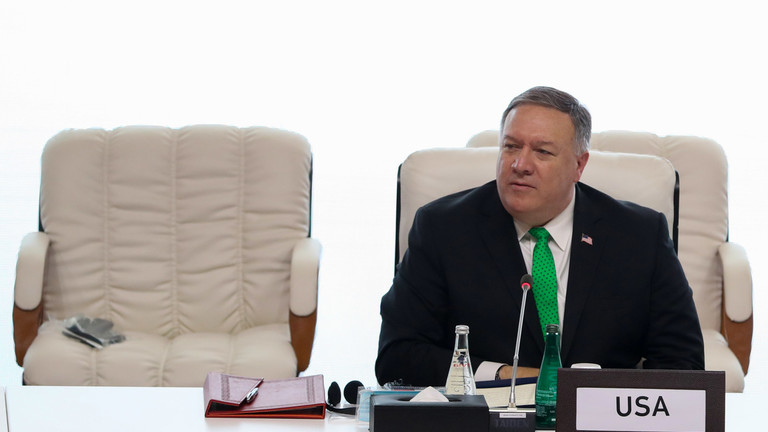
He proceeded to threaten any nation that refuses to comply with Washington on the matter with « consequences, » according to the official statement.
« If UN member states fail to fulfill their obligations to implement these sanctions, the United States is prepared to use our domestic authorities to impose consequences for those failures and ensure that Iran does not reap the benefits of UN-prohibited activity. »
Pompeo promised to announce measures against those who defy the « obligations. »
However, Washington’s NATO allies UK, France and Germany have strongly opposed the move in a letter to the UN Security Council cited by AFP.
« Any decision or action taken with a view to re-installing [the sanctions] would be incapable of legal effect. »
Hours before Pompeo’s announcement, Iranian Foreign Minister Mohammad Javad Zarif called on the international community to stand against the Trump administration’s latest move against Tehran.
« The Americans as a rule act as a bully and impose sanctions. The world community should decide how to act towards bullying. »
Washington’s unilaterally-imposed UN sanctions on Iran are in force starting at 12am GMT on Sunday.
Tensions between Iran and the US reignited after the Trump administration unilaterally withdrew from the 2015 Iran nuclear deal – also known as the Joint Comprehensive Plan of Action, or JCPOA. The agreement was aimed at halting Iran’s nuclear program in exchange for sanctions relief. It was signed by Iran, the US, Russia, China, the UK, Germany and France.
(source: rt.com)
Mohammad Javad Zarif : « Autoriser les Etats-Unis à détruire définitivement l’accord sur le nucléaire iranien serait retourner à la loi de la jungle »
En cherchant à torpiller définitivement l’accord de 2015 sur le nucléaire iranien, l’actuelle administration américaine menace d’anéantir ce qui reste du multilatéralisme et du droit international, affirme, dans une tribune au « Monde », le ministre des affaires étrangères de la République islamique d’Iran.
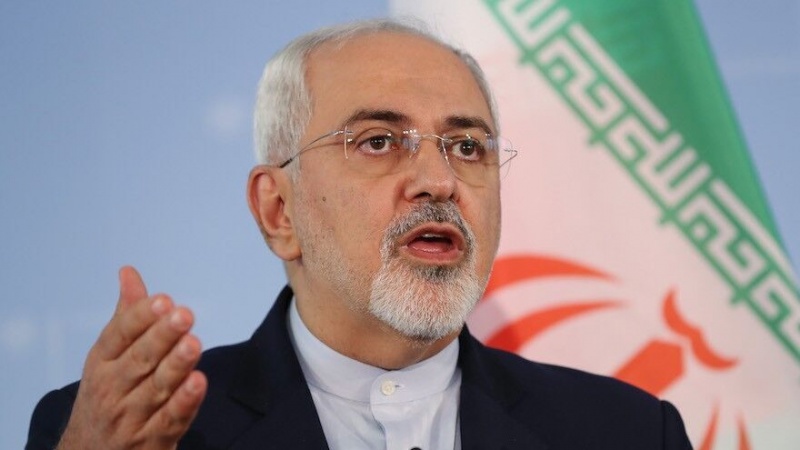
En Iran – pays qui est la cible des sanctions les plus vicieuses et aveugles –, ce que nous avons observé de l’administration actuelle des Etats-Unis est parfaitement clair : celle-ci n’offre aucune perspective quant à l’avenir de la communauté mondiale.
L’inflexibilité et l’imprévisibilité des Etats-Unis n’ont rien à voir avec la mise en œuvre de la théorie des jeux, où les acteurs sont censés prendre des décisions rationnelles. Qu’il s’agisse de sa mauvaise gestion interne du Covid-19 ou de l’affaiblissement de la paix et de la stabilité à l’étranger, le gouvernement actuel à Washington n’a aucun plan véritable, à part de s’en prendre aveuglément à tous ceux qui défendent l’Etat de droit.
Un parfait exemple en est la manière dont les Etats-Unis ont agi par rapport à la résolution 2231 du Conseil de sécurité des Nations Unies, qui a approuvé le Plan d’action conjoint – en anglais Joint Comprehensive Plan of Action (JCPOA) –, communément appelé « accord sur le nucléaire iranien ». En juillet 2015, l’Iran, les Etats-Unis, la Russie, la Chine, la France, le Royaume-Uni et l’Allemagne ont signé cet accord historique pour répondre à toutes les préoccupations concernant le caractère exclusivement pacifique de notre programme nucléaire, tout en libérant le peuple iranien de sanctions inhumaines et injustes.
Ni souhaitable ni viable
Dans le même cadre, les Etats-Unis et d’autres signataires ont coparrainé conjointement la résolution 2231 du Conseil de sécurité des Nations Unies, adoptée à l’unanimité, dont l’accord nucléaire est un élément indissociable et à laquelle sont jointes ses 90 pages, inscrivant ainsi cet accord dans le droit international. Cependant, en mai 2018, l’administration américaine a déclaré qu’elle avait décidé unilatéralement de « mettre un terme à sa participation » au JCPOA.
Depuis lors, l’Iran et le reste de la communauté internationale ont été laissés dans la position extraordinaire de voir les Etats-Unis devenir le premier Etat dans l’histoire de l’ONU à non seulement enfreindre une résolution contraignante qu’il a lui-même parrainée, mais à sanctionner également les gouvernements et les entreprises qui soutiennent le droit international en mettant en œuvre les dispositions de cet accord. Ainsi que j’ai eu l’occasion d’en prévenir le Conseil de sécurité le mois dernier, la prolongation de cette situation n’est ni souhaitable ni viable.
 TANIKO Madagascar