
world order
China and India should aim to safeguard world order along with multilateralism
China and India believe in reforming not revolutionizing the current world order, which both countries should aim to safeguard along with multilateralism, a forum held in Beijing recently heard.
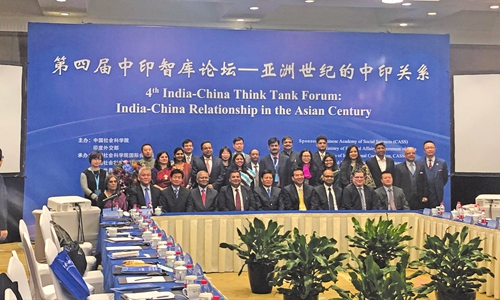
« The existing international mechanism failed to address the current challenges, » Ye Hailin, deputy director-general at National Institute of International Strategy of the Chinese Academy of Social Sciences (CASS) said at the recent 4th India-China Think Tank Forum.
Co-hosted by the CASS and the Indian Council of World Affairs (ICWA), the forum attracted nearly 150 scholars and representatives of political parties and think tanks from China and India.
« It is mainly because the supporting or dominant power of the current world system has lost the capacity and intention to maintain the stability of the world order, rather it only cares about its own interests, » Ye stated at the forum.
Ye noted that emerging powers, such as China and India, do not want to tear down or make fundamental changes to the current world order.
Reform, not revolution
« They are reformers not revolutionists, » said Ye, explaining that « China and India want to bring some adjustments to the current world order and resolve international issues through bilateral or multilateral negotiations rather than using force to seek a zero-sum game. »
S.K. Mohanty, professor at the Research and Information System for Developing Countries, also agrees that both China and the US are needed for engagement in changing the rules for global socioeconomic architecture.
« Present collaboration in terms of looking into each other’s sensitivities would be more beneficial when they cooperate to emerge as a pressure group in the world, » said Mohanty.
« China and India can work together in several regional agreements, such as the Shanghai Cooperation Organization and Eurasian Economic Union. »
Regional integration
Jayan Jose Thomas, associate professor at the Indian Institute of Technology, thinks that China’s development experience, which is not characterized by blind faith in the power of the markets, has thrown a serious challenge to mainstream ideas of economic growth that evolved mostly in Western Europe and North America.
« China is emerging as a leader in new technologies: telecommunications, artificial intelligence, renewable energy, and electric vehicles, » he noted.
 TANIKO Madagascar