
china
China – Nation commemorates 78th anniversary of victory in Anti-Japanese War
Experts call for vigilance against Japan’s remaining militarism

As Sunday marked the 78th anniversary of victory in the Chinese People’s War of Resistance Against Japanese Aggression (1931-45) and the World Anti-Fascist War, people across the nation held ceremonies to commemorate the martyrs and cherish today’s hard-won peace.
Eight decades have passed but the remnants of militarism that caused World War II still remain, experts said, pointing to Japan, which has taken a sharp turn from the path of peaceful development in recent years, and warning of the dangerous trend of its military buildup in the Indo-Pacific region.
China’s Anti-Japanese War was the longest, largest and most costly war of national liberation that the Chinese people fought against foreign aggressors in modern history. It was also the first complete victory won by the Chinese people in their struggle for national liberation.
The great triumph in the war marked a full victory in the global war against fascism, re-established China as a major country in the world, and won the Chinese people the respect of all peace-loving people around the world, stressed participants in a symposium held on Sunday in Beijing attended by about 200 officials including Li Shulei, a member of the Political Bureau of the Communist Party of China (CPC) Central Committee and head of the Publicity Department of the CPC Central Committee.
To commemorate this day, the Museum of the War of Chinese People’s Resistance Against Japanese Aggression held a series of exhibitions showing how China, as the main battlefield in the East, took the lead in opening the prelude to the global anti-fascist war, breaking the plot of Germany and Japan to divide the world and becoming a crucial pillar in the Asia-Pacific region. Lire la suite »
President Xi’s inspections encourage continuous effort in conservation of ‘Gold Corn Belt’ and advancement of high-end manufacturing
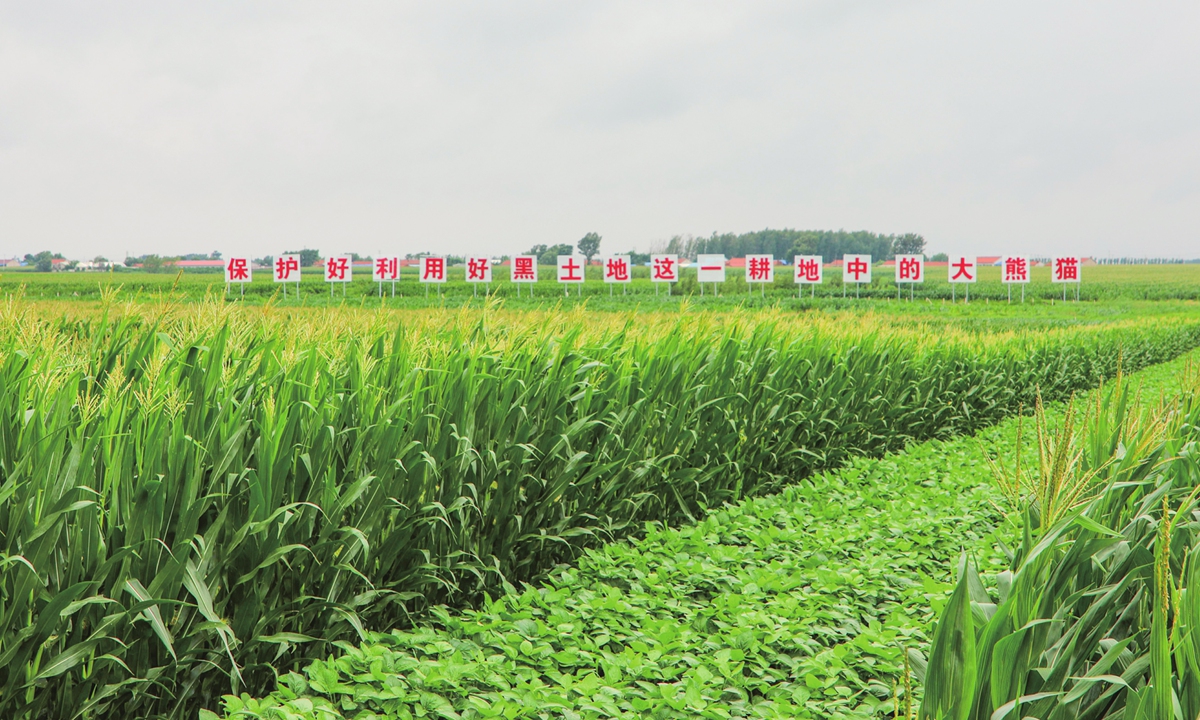
From the Songliao Plain to the banks of the Hailan River, from the shores of Chagan Lake to industrial parks, since the 18th National Congress of the Communist Party of China (CPC), Xi Jinping, general secretary of the CPC Central Committee, Chinese president and chairman of the Central Military Commission, has visited Northeast China’s Jilin Province three times for inspection and research. He has gone to the far reaches of rural areas, communities, science and technology parks and enterprises, providing fundamental guidance, providing direction and injecting strong impetus to the comprehensive revitalization of the region in the new era.
Recently, the Global Times reporter, together with teachers and students from the School of Journalism and Communication at the Communication University of China, followed in the footsteps of Xi’s visits to Jilin, tracing the red memories left behind by the president, understanding the original aspirations of the Party’s centennial struggle, and drawing wisdom and strength to continue moving forward in the century-long journey of the Party.
Through exploring high-end manufacturing, to gain an intimate understanding of the development of national advanced technology industry clusters, appreciate the innovative charm of a major country’s cutting-edge technology, and deeply comprehend the strategic significance of a manufacturing powerhouse advancing toward a strong manufacturing country, the research team visited villages, witnessed the development of agricultural modernization, experienced the beauty of a harmonious China under the protection of the ecological civilization system, and gained a profound understanding of the scientific concept of harmonizing economic development and ecological environment protection.
By following in the footsteps of President Xi, the most authentic stories of China are documented and the most touching profiles are presented to the world.
What are secrets behind accelerating Chinese Dream?

More than one year has passed since the Beijing 2022 Winter Olympic Games concluded with a spectacular and unforgettable closing ceremony featuring stunning venues and technological innovations that captivated the world, yet its essence still lives on in every Chinese person’s heart.
International attention needed to solve the Palestinian question amid escalating violence

Palestinians run to take cover during clashes between Palestinians and Israeli forces in the West Bank city of Jenin, on July 3, 2023. At least eight Palestinians were killed and dozens were injured in Jenin on Monday during the Israeli operation launched from midnight throughout the day, said the Palestinian Health Ministry. Photo: Xinhua
The international community must refocus their attention on the Palestinian question to collectively work toward helping the Middle East gain peace and stability, analysts reached by the Global Times said on Tuesday after Israel’s recent large-scale attacks on Palestine.
Palestine on Monday decided to stop all contacts, meetings and security coordination with the Israeli government in protest against the latter’s brutal raids in the West Bank, the Xinhua News Agency reported Monday local time.
On Monday, the Israeli army, backed by armored vehicles, bulldozers, drones and helicopters, waged a large-scale military attack against the northern West Bank city of Jenin and the refugee camps there, according to Xinhua
At least eight Palestinians were killed and 80 others were injured during the raids, which Richard Hecht, an Israeli military spokesperson, said was an escalation unseen since 2006, according to media reports.
The recent escalating situation in the Palestine-Israel conflict is just verifying what we have always been saying: The Palestine-Israel issue is the core of Middle East issues and the region cannot realize peace and stability unless the problem is solved, Li Weijian, a research fellow with the Institute for Foreign Policy Studies of the Shanghai Institutes for International Studies, told the Global Times.
Li further emphasized that the solution to the problem seems to be even more urgent now given the wave of reconciliation in the region. He called on the international community to refocus attention on the issue. Lire la suite »
BRICS countries vow to form closer partnership for global development based on mutual benefit
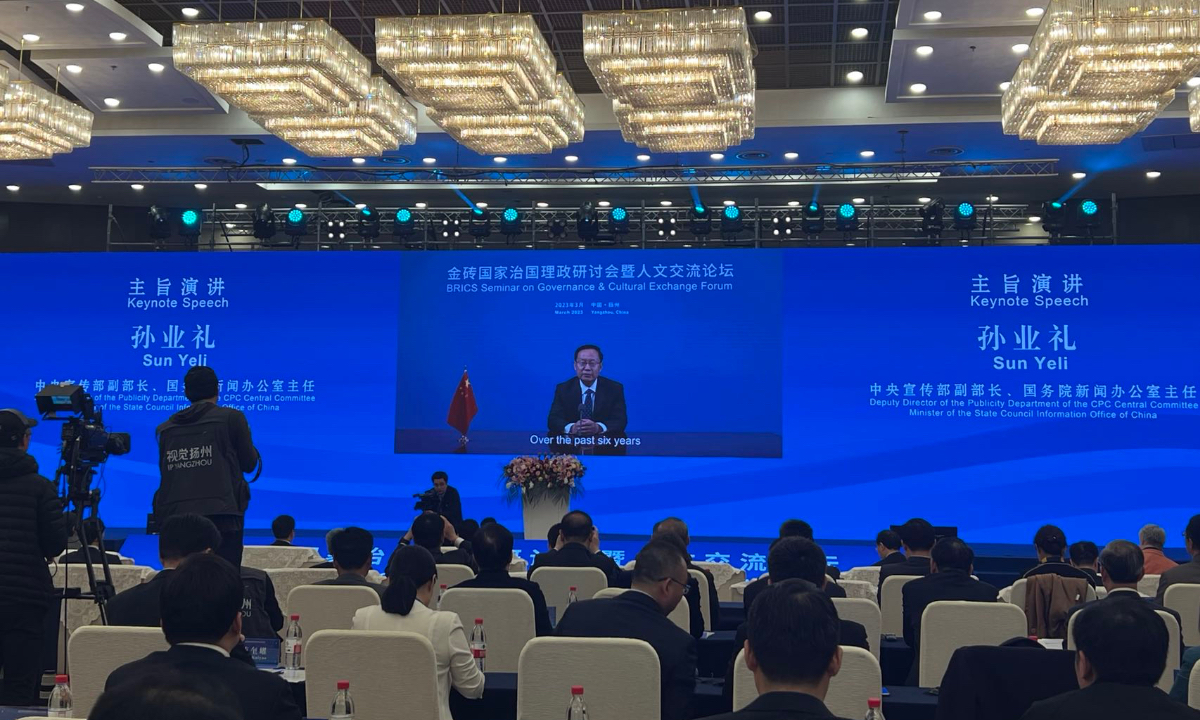
BRICS countries vowed to form a closer cooperative partnership at a seminar that shares experiences in governance and strengthens cooperation to create a global development pattern that is inclusive, balanced, and coordinated with mutual benefits aiming for common prosperity.
Speaking on this year’s themes “A New Blueprint for BRICS Cooperation, A New Dynamic for Global Development” and “Closer Cultural Ties for Stronger BRICS Partnerships,” more than 200 representatives gathered at the 2023 BRICS Seminar on Governance & Cultural Exchange Forum held in Yangzhou, East China’s Jiangsu Province, and online on Thursday and Friday to brainstorm ideas related to governance and to reach a broad consensus on building high-quality partnerships and deepening and strengthening cooperation among BRICS countries.
Sun Yeli, deputy director of the Publicity Department of the Communist Party of China (CPC) Central Committee and minister of the State Council Information Office, delivered a keynote speech via video link at the opening ceremony of the seminar, saying that Chinese modernization is a major achievement of the long-term exploration and practice by the Chinese people under the leadership of the CPC. It has been proved to be a path benefiting both China and the world, which has expanded the options for developing countries to pursue modernization and created a new form of human civilization.
Facing a global economy that is struggling to recover from imbalanced development, global development and governance are at an important stage of transformation, BRICS countries have reached consensus that they should adhere to independence on pursuing modernization and make choices that suit their own development needs based on their own national conditions and culture, to create diversified paths for mankind to realize modernization, said Du Zhanyuan, president of the China International Communications Group, who addressed the seminar at the opening ceremony.
Two new reports on global development and governance – the BRICS in Global Governance: New Role and New Model, and Global Survey: BRICS Cooperation in the New Era of Global Development 2022 – were released by the Academy of Contemporary China and World Studies at the seminar on Thursday.
Gallup polls serve as a tool to contain China and maintain US dominance
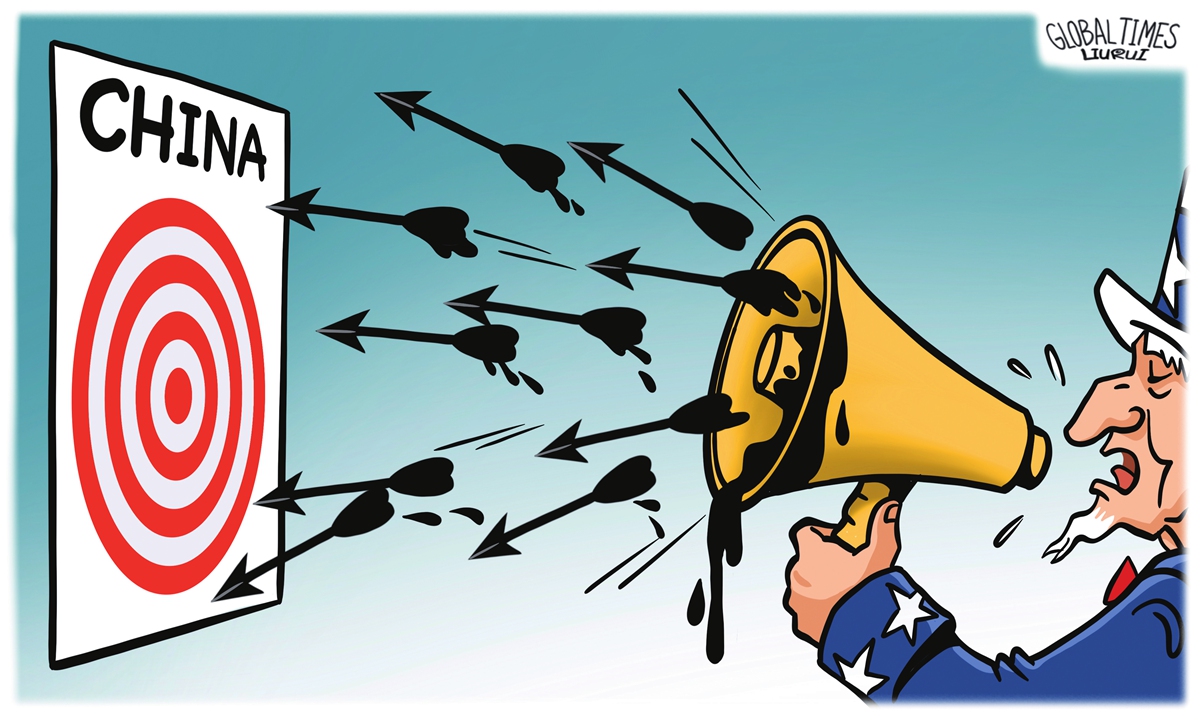
In the US, polls seem to have become a tool manipulated by its political elites to discredit China on the international stage. Such underhand practice is another manifestation of the US’ hysteria toward China.
The Gallup reported on Tuesday that Americans’ view on China hit a record low, with only 15 percent of respondents seeing China favorably, according to its new poll.
Americans’ understanding of China is not based on the country’s actual development, but negatively influenced by US media’s biased reports. These media outlets have created a false image of China that threatens US global leadership, challenges the so-called international order, and coerces others everywhere. This heavily affects the public’s perception of China, according to Shen Yi, an international relations professor at Fudan University.
Some US polling agencies are keen to conduct surveys on Americans’ attitude toward China so that Washington can use the results to mobilize the Americans, as well as its allies and partners to contain and isolate China. Lire la suite »
China ‘well prepared’ as US looks to put Japan in actual combat frontlines
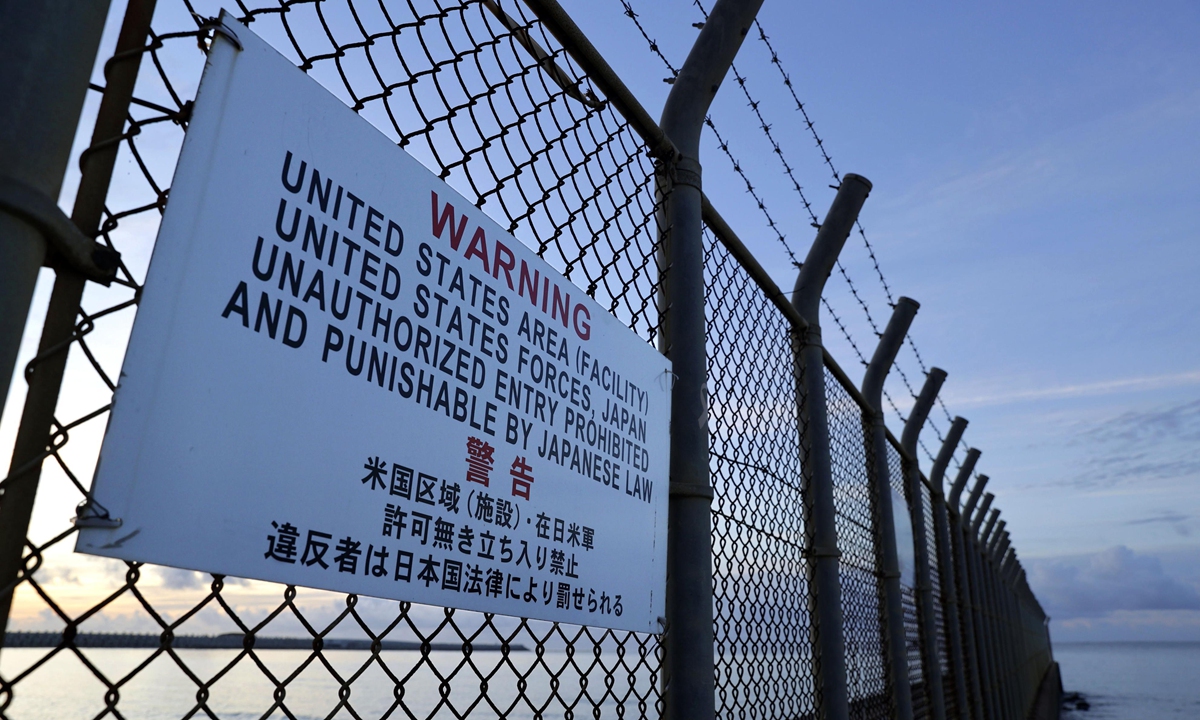
he US plans to set up a rapid reaction Marine unit throughout Japan’s Okinawa islands within a few years, media reported on Tuesday, one day ahead of the 2023 US-Japan Security Consultative Committee meeting in Washington, DC. Japanese Prime Minister Fumio Kishida also plans to talk with US President Joe Biden on January 13 after concluding his ongoing Europe and UK tour.
A saga of diplomatic and military activities suggests that Tokyo and its allies are likely devising a more detailed and actual-combat strategic deployment against China, but China is always well-prepared to meet the challenge, analysts said.
Citing sources, Kyodo News reported on Monday (ET) that a Marine Littoral Regiment (MLR), will be established as part of a realignment of the Marine Corps in Japan’s southwestern island prefecture, which is close to China’s Taiwan region.
The US plans to disperse US Marine units throughout Japan’s Okinawa islands by 2026, equipping them with missiles and lighter gear to « deter China’s military, » Reuters reported Tuesday, citing Japan’s Yomiuri newspaper.
Chinese Foreign Ministry spokesperson Wang Wenbin called on Japan and the US to ensure their military cooperation does not harm the interests of third parties or regional peace and stability. Lire la suite »
Is today’s China yesterday’s Soviet Union?
When Soviet-style totalitarianism collapsed three decades ago under the weight of its economic failures, China decided to stay the course. The question now is whether China’s own totalitarian experiment can last.

Stanford, California – The 20th National Congress of the Communist Party of China (CPC), held in October, confirmed President Xi Jinping and China’s top political leadership for the next five years. But what that means for the Chinese economy going forward will depend on three factors: the state of the country’s institutions, past and current economic conditions, and the leadership’s political intentions.
China’s most fundamental institutions are totalitarian, reflecting and reproducing the CPC’s monopoly control over every facet of society, including the economy. The party-state institutions of totalitarian control were transplanted, in full, from the Soviet Union in 1949. When Soviet-style totalitarianism collapsed three decades ago under the dead weight of its economic failures, China appeared to be an exception. The question now is whether China’s own totalitarian experiment can last.
To answer that, one must understand the structure of “totalitarianism with Chinese characteristics.” A key pillar is regionally decentralized totalitarianism (RDT), which combines highly centralized totalitarian control over politics, ideology and personnel with decentralization in administrative and economic affairs.
This is the arrangement that facilitated the post-Mao reforms. Centralized totalitarian control of the economy was relaxed, and RDT evolved into regionally decentralized authoritarianism (RDA). But since Xi came to power in 2012, China has shifted back toward totalitarianism, with the CPC leadership reasserting control, particularly over the burgeoning private sector. That reversal is a central reason for China’s sharp economic slowdown in 2022.
Opening up
Much of China’s rapid economic growth in the early post-Mao reform era was recovery following the devastation inflicted from the late 1950s until the late 1970s by the Great Leap Forward and the Cultural Revolution. But the remaining share represented something beyond mere recovery, and is something of a puzzle.
China’s reforms succeeded where all of the reform efforts by its communist counterparts in the Soviet Union and Central and Eastern Europe had failed, because China had managed to solve a fundamental incentive problem that characterizes party-state bureaucracies. This earlier success offers clues about whether its economy remains sustainable today.

Following Mao’s death, the CPC leadership came to believe that economic growth was the key to its survival, and it settled on RDT as the institutional foundation for new reform policies. Under the new model, regional economic performance would determine the promotion of local party-state bureaucrats, which led to competition between subnational bureaucrats. To gain an advantage, some covered up or even supported illegitimate private enterprises, and thus inadvertently unleashed rapid growth in China’s private sector — a development that was incompatible with totalitarianism and certainly never tolerated in the Soviet Union.
US and its likes should reflect on colonialism and systematic discrimination against indigenous peoples: Chinese envoy

The representative of China at the United Nations Human Rights Council called on the US, Canada and Australia to seriously reflect on the systematic discrimination and oppression of indigenous peoples in their countries on Wednesday, adding that the COVID-19 pandemic has exacerbated the plight of indigenous people in the US and Canada, and urging these countries to better protect the rights of indigenous people in post-pandemic economic and social recovery period.
On Wednesday, Chinese representatives attended the annual discussion on indigenous rights at the 51st Regular Session of Human Rights Council and the dialogue of experts on indigenous rights.
The Chinese representative said that China is deeply concerned about the neglect, discrimination, unfair treatment and even abuse of indigenous people in those countries.
According to the Native American Rights Fund, Native American voters face 11 common barriers to political participation, including limited government services and a lack of funding for elections.
Canada shocked the world with the discovery of alarming numbers of children’s remains and unmarked aboriginal burials at the site of a boarding school.
The incarceration rate of indigenous Australian people is 15 times higher than that of non-indigenous Australians, and the death rate in detention is on the rise, causing family separation and seriously undermining the development of indigenous communities.
The Chinese representative also called on the above-mentioned countries to seriously reflect on the systematic discrimination and oppression suffered by indigenous peoples and implement the UN Declaration on the Rights of Indigenous Peoples.
What’s more, the systemic discrimination and inequality faced by indigenous people in some countries has not been improved by the implementation of post-pandemic economic and social recovery plans. American Indians and Alaska Natives have long had far higher unemployment rates than other ethnic groups, and the gap has widened during the post-pandemic economic recovery period. Lire la suite »
US ready to use force to defend Taiwan, says President Biden
US President Joe Biden said he would be willing to intervene militarily to defend Taiwan if it were attacked. It is one of the strongest statements in support of the island in decades. Biden also warned that China’s increasingly assertive stance over Taiwan was « flirting with danger ». « We agreed with the One China policy, we signed on to it… but the idea that it can be taken by force is just not appropriate, » he said. The US president pointed to Russia’s ongoing invasion of Ukraine, saying that sanctions against Russia should be continued « in many ways » to send a right message to China over Taiwan. His statements appear to clash with the US tradition of « strategic ambiguity » as Washington usually avoids making any such explicit guarantees to Taiwan. Taiwan’s foreign ministry thanked Biden and the US government for reaffirming their commitment to the island. Biden is on a five-day Asia tour. After three days in South Korea, he arrived in Tokyo Monday morning, where he launched a new regional economic plan involving 12 Indo-Pacific states. The Indo-Pacific Economic Framework for Prosperity, or IPEF, provides a means for partner countries to deal with key issues including climate change, supply chain and digital trade, but does not extend to seeking to negotiate tariffs or ease market access.
DW News
The New Cold War | John Mearsheimer | Tom Switzer | CIS
In his new essay for the New York-based Foreign Affairs magazine, Mearsheimer argues that the US and China are locked in a dangerous security competition, more perilous than the first Cold War. In essence, once China grew wealthy, a US-China cold war was inevitable. Had US policymakers understood this logic in the early 1990s, they would have tried to slow down Chinese growth and maximise the power gap between Beijing and Washington.
However, the US did the opposite: it pursued a policy of engagement, which aimed to help China grow wealthier – based on the assumption that China would become a democracy and a responsible stakeholder, which would lead to a more peaceful world. Instead of fostering harmonious relations between China and the US, engagement led to an intense rivalry.
Is Australia and the world in deep trouble? Absent a major internal Chinese crisis, Washington and Beijing are consigned to waging a dangerous security competition. Can we manage on the margins to prevent disaster?
John Mearsheimer is professor of political science and international relations at the University of Chicago and author of The Tragedy of Great Power Politics (2001). He was a guest at the Centre for Independent Studies in 2019.
Host: Tom Switzer is executive director of the Centre for Independent Studies.
- ← Précédent
- 1
- 2
- 3
- 4
- Suivant →
 TANIKO Madagascar