
COP28
À la COP28, un « accord historique » sur les énergies fossiles adopté, ovation dans la salle à Dubaï
Le président de la COP28, le Sultan Al Jaber a convoqué une séance plénière dans la matinée afin de faire approuver ce nouvel accord.

CLIMAT – Ovations et applaudissement. Il était un peu avant 8h30 ce mercedi 13 décembre quand de la fumée verte est sortie de la COP28 à Dubaï. Quelques heures après que la présidence émiratie a dévoilé un nouveau projet de compromis, il a été adopté par l’ensemble des pays présents. Surprise, il renforce l’appel à abandonner les énergies fossiles dans le but d’atteindre la neutralité carbone en 2050, quand son prédécesseur suscitant un tollé n’en évoquait même pas la « sortie ».
Ce nouveau document, dont la publication a été attendue toute la nuit par des négociateurs privés de sommeil, propose pour la première fois dans l’histoire des conférences sur le climat des Nations unies de mentionner toutes les énergies fossiles, largement responsables du changement climatique. Il s’agit d’une décision « historique pour accélérer l’action climatique », a déclaré Sultan Al Jaber, président de la conférence de l’ONU.
Seule la « réduction » du charbon avait été actée à la COP26 à Glasgow. Jamais le pétrole ni le gaz n’avaient été désignés.
Alors que chaque mot a été négocié par les Emiratis, le texte appelle désormais à « transitionner hors des énergies fossiles dans les systèmes énergétiques, d’une manière juste, ordonnée et équitable, en accélérant l’action dans cette décennie cruciale, afin d’atteindre la neutralité carbone en 2050 conformément aux préconisations scientifiques ».
L’appel à accélérer l’action dès la décennie en cours était une exigence de l’Union européenne et de nombreux autres pays.
« S’éloigner », « abandonner »
En choisissant le terme de « transitioning away » (« transitionner hors de », « s’éloigner », « abandonner » selon les traductions possibles en français), le texte ne parle plus de « phase-out » (« sortie ») du pétrole, du gaz et du charbon, un terme devenu depuis des mois la bannière derrière laquelle se rangeaient plus d’une centaine de pays et des milliers d’ONG.
Dans ce projet d’accord figure également une reconnaissance du rôle joué par des « énergies de transition », allusion au gaz, pour assurer la « sécurité énergétique » des pays en développement, où près de 800 millions de personnes manquent d’accès à l’électricité. Lire la suite »
COP28 : sortir des énergies fossiles ou capter les émissions de CO2 ?
Pour la première fois depuis la COP21, un bilan mondial de l’action climatique doit être présenté, négocié et adopté à la COP28 de Dubaï. Quel est le chemin parcouru depuis les accords de Paris en 2015 ? L’UE milite pour une sortie progressive du pétrole, du gaz et du charbon.
Les pays pétroliers aimeraient continuer à produire en développant le captage et le stockage du carbone qu’ils émettent. Un accord sur une sortie progressive des énergies fossiles est-il possible ? Enfin, qui paiera les conséquences du réchauffement ? La mise en œuvre du fonds « pertes et dommage climatiques » a bien été approuvée dès l’ouverture de la COP28. Ce fonds est censé indemniser les pays pauvres en première ligne du dérèglement climatique. Il reste à définir avec précision les contours.
Sultan Al Jaber obligé de se justifier après une énième polémique sur les énergies fossiles
Lors d’une visioconférence le 21 novembre dernier, Le Président de la COP28 a affirmé ceci: « aucun scénario, ne nous dit que la sortie des énergies fossiles nous permettra d’atteindre 1,5 degrés » de réchauffement climatique.
Quand le quotidien britannique The Guardian a ressorti l’extrait ce dimanche, Sultan Al Jaber a dû se justifier. Il a dit faire confiance à la science et croire nécessaire une sortie à terme des énergies fossiles.
Record number of fossil fuel lobbyists get access to Cop28 climate talks
UAE-hosted summit admitted at least 2,456 people affiliated with oil and gas industries, analysis finds
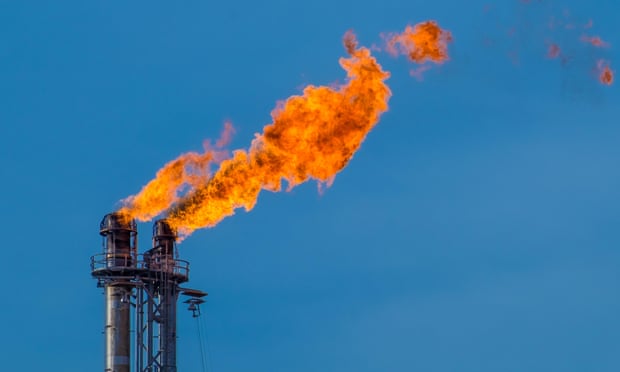
At least 2,456 fossil fuel lobbyists have been granted access to the Cop28 climate negotiations, according to an analysis.
The figure calculated by the Kick Big Polluters Out (KBPO) coalition is a record number that raises further questions about the fossil fuel industry’s influence over this year’s UN summit, which is being run by the president of the United Arab Emirates’ national oil company.
The scale of oil and gas influence in Dubai is unprecedented, with almost four times as many industry-affiliated lobbyists than the number registered for Cop27 in Sharm el-sheikh – which itself was a record year.
Lobbyists vying to push the interests of oil and gas companies such as Shell, Total and ExxonMobil outnumber every country delegation apart from Brazil (3,081), which is expected to run Cop30 in 2025, and the host country, which registered 4,409 attenders.
Fossil fuel lobbyists also outnumber official Indigenous representatives (316) by seven to one – another sign, say campaigners, that oil and gas industry profits are being prioritised over a sustainable planet and frontline communities.
Caroline Muturi, a coordinator the campaign group Ibon Africa, said: “These findings tell us that the dynamics within these spaces remain fundamentally colonial. Cops have become an avenue for these corporations to greenwash their polluting businesses and foist dangerous distractions from real climate action.”
The revelations come during another catastrophic year for the climate, with supercharged extreme weather events striking every corner of the world, from unprecedented rainfall in Libya, severe drought threatening the Amazon, and a sharp increase in heat deaths from Arizona to southern Europe.
Scientists say such destructive storms, drought and heat would have been almost impossible without the warming caused by burning fossil fuels, which must be phased out to avoid total climate breakdown.
Momentum to secure a commitment to phase out fossil fuels at Cop28 has been growing, especially among the most vulnerable countries, but many of the biggest polluting countries are holding out.
The irreversible loss and damage in developing countries is estimated by some studies to be greater than $400bn annually – and expected to rise – so time is of the essence.
Rachel Rose Jackson, a research director at Corporate Accountability, said: “If Cop28 doesn’t deliver a fossil fuel phase out, we know who to blame. We are angry, and we are over having to explain again and again why the fossil fuel industry should not be writing the climate rules.”
KBPO is a coalition of more than 450 organisations across the world calling for an end to fossil fuel companies’ influence in climate policy. After years of pressure for greater transparency, the UN caved and this year required applicants to declare who they represent, which may partly explain the rise in oil and gas lobbyists, as they may previously have attended previous Cops incognito.
The data on lobbyists was compiled by the organisations Corporate Accountability, Global Witness and Corporate Europe Observatory from the UN’s provisional list of about 84,000 participants at Cop28, and is the most in-depth study into fossil fuel industry presence at any talks to date. It found:
-
Fossil fuel lobbyists received more passes than the combined total of delegates (1,609) from the 10 most climate vulnerable countries combined, including Somalia, Chad, Tonga, Solomon Islands and Sudan.
-
Many fossil fuel lobbyists were granted access as part of a trade association, of which nine of the 10 largest came from the global north. This included the Geneva-based International Emissions Trading Association, which brought 116 people including representatives from Shell, TotalEnergies and Norway’s Equinor.
The sharp rise in industry lobbyists is perhaps unsurprising given recent revelations that the host country planned to use climate meetings with other countries to promote deals for its national oil and gas companies.
The Cop president, Sultan Al Jaber, was recorded claiming there was “no science” indicating that a phase-out of fossil fuels is needed to restrict global heating to 1.5C (2.7F) above preindustrial levels.
Agreement to phase out fossil fuels would be huge for humanity, says Gore
Exclusive: former US vice-president and climate activist says phase-out can be only measure of success for Cop28
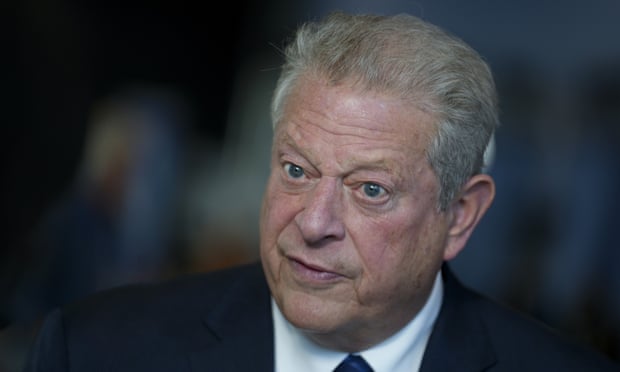
An agreement by countries to phase out fossil fuels would be “one of the most significant events in the history of humanity”, according to Al Gore, amid wrangling by governments at Cop28.
It would be a “welcome surprise” if world leaders agreed at the climate talks to call for an end to fossil fuels, but such a declaration would have “enormous impact” upon the world, Gore told the Guardian at the gathering in the United Arab Emirates.
“If there were a decision here to surprise the world to say ‘OK we get it now, we’ve made enough money, we will get on with what needs to be done to give young people a sense of hope again and stop as much as suffering as possible and start the phase-out of fossil fuels’, it would be one of the most significant events in the history of humanity,” the former US vice-president said.
Gore, now a prominent advocate for action on the climate crisis, welcomed the establishment of a loss and damage fund for developing countries worst hit by heatwaves, droughts, floods and other disasters but added the amount of money committed to it by rich countries is a “pittance” and that the crucial element at the Dubai gathering would be an agreement to wind down fossil fuels.
“There is only one measure of success for Cop28: will it include a commitment to phase out fossil fuels or not,” he said. “If it does include such a commitment it will be a smashing success; if it does not it will be a failure.”
More than half of the 200 countries that are represented at Cop28 have signalled they would support agreement language that mentions a phase-out of fossil fuels. John Kerry, the US climate envoy, has said it is “hard for anybody to understand” why the primary cause of the climate crisis would be allowed to continue, while António Guterres, secretary-general of the UN, urged leaders on Friday to unambiguously back the end of oil, coal and gas. “Not reduce. Not abate. Phase out,” Guterres said.
However, the consensus format of these UN summits means that countries have to all assent to the text of an agreement and it is understood that countries such as Russia, China and Saudi Arabia are uncomfortable with a compact that would call time on fossil fuels.
Oil companies, many posting record profits, are planning large expansions in drilling, including Adnoc, the national oil company of the UAE which is headed by Sultan Al Jaber, who is also president of Cop28. Al Jaber has strenuously denied allegations that he is using the climate summit as a way to further oil and gas deals for Adnoc.
Gore, however, said that Adnoc is “one of the dirtiest companies, it’s one of the least responsible companies” and that the appointment of Al Jaber to head Cop28 has been damaging.
“They made a mistake, let’s be honest, in angling to put a fossil fuel company CEO in charge of this Cop28,” he said. “I mean it’s absurd. It’s totally ridiculous.”
(source: theguardian.com)
Kenya: Les Emirats annoncent 4,5 milliards de dollars d’investissements pour les énergies propres en Afrique
Les Émirats arabes unis ont annoncé mardi 4,5 milliards de dollars (4,1 milliards d’euros) d’investissements dans les énergies propres en Afrique, lors d’un sommet sur le climat visant notamment à attirer sur le continent des financements pour lutter contre le réchauffement climatique.
« Nous allons déployer 4,5 milliards de dollars (…) pour lancer un pipeline de projets rentables d’énergie propre sur ce continent très important », a déclaré dans un discours Sultan Al Jaber, qui dirige la société gouvernementale d’énergies renouvelables Masdar, le géant pétrolier émirati ADNOC et qui présidera également les négociations de la prochaine COP28 à Dubaï en fin d’année.
« Si l’Afrique perd, nous perdons tous », a prévenu Sultan Al Jaber, qui est également ministre de l’Industrie et des Technologies des Émirats arabes unis.
Cet investissement vise à « développer 15 GW (gigawatts) d’énergie propre d’ici 2030 » et à « catalyser au moins 12,5 milliards de dollars (11,6 milliards d’euros, ndlr) supplémentaires provenant de sources multilatérales, publiques et privées ».
En 2022, la capacité de production d’énergies renouvelables du continent était de 56 gigawatts, selon l’Agence internationale des énergies renouvelables.
Cette annonce été faite lors du premier Sommet africain sur le climat qui se tient dans la capitale kényane Nairobi visant à promouvoir le potentiel de l’Afrique pour les énergies propres.
En ouverture de ce sommet historique, le président kényan avait estimé que l’Afrique a une « opportunité sans équivalent » de se développer en participant à la lutte contre le réchauffement climatique, mais qu’elle avait besoin d’investissements internationaux massifs.
Le sommet de Nairobi vise également à établir une vision continentale commune sur le climat en vue des prochaines négociations climatiques internationales, qui culmineront avec une bataille annoncée sur la fin des énergies fossiles à la COP28 à Dubaï de fin novembre à début décembre.
(source: connaissancedesenergies.org)
 TANIKO Madagascar