
Nicaragua
Au Nicaragua, le gouvernement annonce la libération et l’exil pour Rome de plusieurs ecclésiastiques critiques envers le président Daniel Ortega
Parmi les personnes relâchées figurent les évêques Rolando Alvarez et Isidoro Mora, ainsi que 13 autres prêtres arrêtés fin décembre. Le pape François avait qualifié en mars le régime d’Ortega de « dictature grossière ».
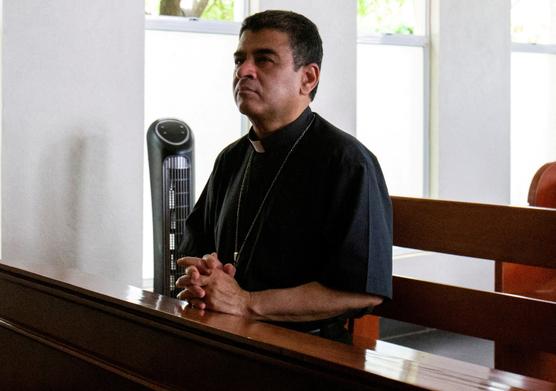
Le gouvernement nicaraguayen a annoncé dimanche avoir libéré deux évêques catholiques, dont Monseigneur Rolando Alvarez, très critique du président Daniel Ortega, 13 prêtres et trois séminaristes, et les avoir envoyés à Rome.
Monseigneur Alvarez, 57 ans, avait été arrêté en août 2022 et condamné en février 2023 à vingt-six ans de prison. En octobre, lors de la libération et du renvoi vers le Vatican de 12 autres prêtres catholiques, M. Alvarez avait dit préférer rester en prison qu’être exilé, tandis que les États-Unis et diverses organisations internationales de défense des droits humains réclamaient sa libération.
Parmi les personnes relâchées figurent également l’évêque Isidoro Mora et 13 autres prêtres arrêtés fin décembre, selon les médias nicaraguayens et des opposants en exil. Début janvier le pape François avait dit suivre « avec une profonde préoccupation » le sort de ces prêtres arrêtés aux alentours de Noël. Il y a quelques mois, il avait qualifié le gouvernement Ortega de « dictature grossière ».
La présidence nicaraguayenne a précisé dans un communiqué que les religieux libérés « ont déjà été reçus par les autorités du Vatican, conformément aux accords de bonne foi et de bonne volonté, qui cherchent à promouvoir la compréhension et à améliorer la communication entre le Saint-Siège et le Nicaragua, pour la paix et le bien ».
203 prêtres et religieux expulsés, bannis ou interdits d’entrée au Nicaragua depuis 2018
Des médias nicaraguayens tels La Prensa, El Confidencial et 100 % Noticias, dont les rédactions travaillent en exil depuis le Costa Rica, ont affirmé que l’avion était déjà arrivé à Rome. Une information confirmée par le Groupe de réflexion des ex-prisonniers politiques (Grexcr), basé à San José.
Nicaragua bans Jesuits and confiscates all their assets
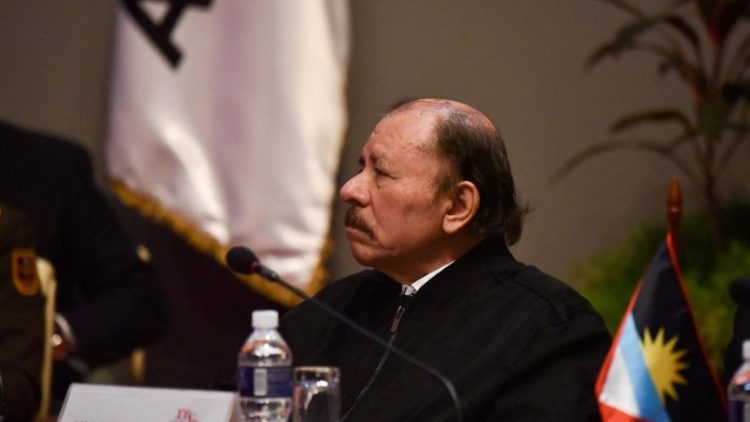
As the crackdown against the Catholic Church in Nicaragua continues, President Daniel Ortega’s regime declares the Jesuit religious order illegal and orders the confiscation of all its assets
By Lisa Zengarini
Despite worldwide protests and condemnation, the Sandinista regime’s crackdown against the Catholic Church and opposition continues unabated.
After expelling a community of Jesuit priests from their private residence close to the Central American University (UCA) in Managua, and confiscating the university, on Wednesday, 23 August, Nicaraguan authorities banned the entire Society of Jesus from the country and ordered the confiscation of all its assets, claiming the religious order had failed to comply with tax reporting.
Jesuit-run UCA confiscated and Jesuits evicted from their residence
The move comes one week after the government closed the Jesuit-run UCA in Managua which was a hub for 2018 protests against President Daniel Ortega’s regime, arguing it was a “centre of terrorism”.
The seizure, which adds the some 26 Nicaraguan universities the Sandinista regime has closed since 2021, was followed three days later by the eviction of a community of Jesuit priests from their residence nearby.
The measures have sparked strong reactions from Jesuit worldwide, including the Superior General of the order, Father Arturo de Sosa, SJ.
In a statement last week, Central American Province of the Society of Jesus described the government policy as a systematic violation of human rights “aimed at consolidating a totalitarian state.”
New condemnation from the Central American Jesuit Province
In a new statement released on Wednesday, 23 August, the Jesuit Province strongly condemned the “new aggression against the Jesuit Order in Nicaragua” and, again, appealed the Nicaraguan government to put an immediate end to its “systematic repression” and violation of human rights leading the country to a totalitarian state.
The statement further urged President Ortega and his wife, Vice-President Rosario Murillo to seek “a rational solution” to the contention “in which truth, justice, dialogue, respect for human rights, the rule of law”, while asking for « the respect of the freedom and total integrity » of the Jesuits working in the country and their collaborators.
Finally, the Jesuit Province of Central America expressd their closeness to the « thousands of victims » of government repression in Nicaragua « awaiting justice and reparation » and gratitude for world-wide support and solidarity » received during this crisis.
Worsening relations between Sandinista Government and Church
Lire la suite »
Nicaragua : le président annule la réforme à l’origine de manifestations meurtrières
Le président du Nicaragua Daniel Ortega a renoncé aujourd’hui à sa réforme controversée des retraites, point de départ d’une vague de manifestations qui a fait au moins 24 morts en cinq jours.
Lors d’une rencontre avec des chefs d’entreprise, le chef d’Etat de gauche a annoncé que l’Institut nicaraguayen de sécurité sociale (INSS) ne mettrait pas en oeuvre cette réforme, qui devait augmenter les contributions sociales des salariés comme des employeurs pour essayer d’équilibrer le système de retraites.
(avec AFP)
 TANIKO Madagascar