
Xi Jin Ping
La Corée du Sud sollicite la Chine pour freiner le programme nucléaire nord-coréen
Le président sud-coréen, Lee Jae-myung, a demandé à son homologue chinois, Xi Jinping, de jouer un rôle de médiateur auprès du dirigeant nord-coréen, Kim Jong-un, qui avait annoncé préparer ses forces nucléaires à une « guerre réelle ».
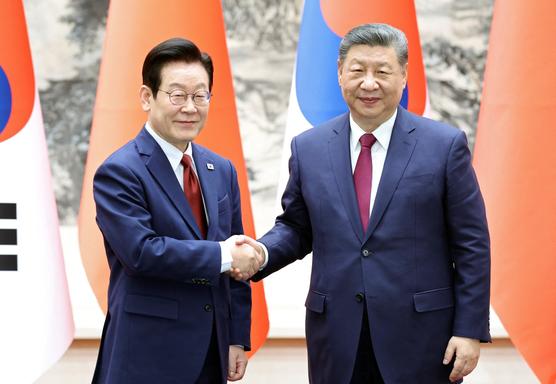
S’adressant à des journalistes à Shanghaï à l’issue de sa visite en Chine, le président sud-coréen, Lee Jae-myung, a déclaré, mercredi 7 janvier, avoir demandé l’aide du dirigeant chinois, Xi Jinping, pour freiner le programme nucléaire de Pyongyang, en suggérant un gel de ce programme en échange d’une « compensation ». « J’aimerais que la Chine joue un rôle de médiateur sur les questions liées à la péninsule coréenne, y compris le programme nucléaire nord-coréen. Tous nos canaux sont complètement bloqués », a-t-il dit avoir déclaré à M. Xi en début de semaine lors de leurs entretiens à Pékin.
Selon lui, le dirigeant chinois a répondu en exhortant Séoul à faire preuve de « patience » envers son voisin, compte tenu de la détérioration des relations entre les deux Corées. « Et ils ont raison. Pendant assez longtemps, nous avons mené des actions militaires que la Corée du Nord a pu percevoir comme menaçantes », a concédé Lee Jae-myung.
« Il est dans l’intérêt commun de toutes les parties de maintenir la paix et la stabilité dans la péninsule [coréenne]. La Chine continuera à sa façon de jouer un rôle constructif à cette fin », a dit une porte-parole du ministère des affaires étrangères chinois, Mao Ning.
China-ASEAN relations ‘most successful, vibrant model’ for cooperation in Asia-Pacific: Xi
From ‘golden era’ to ‘diamond decade’
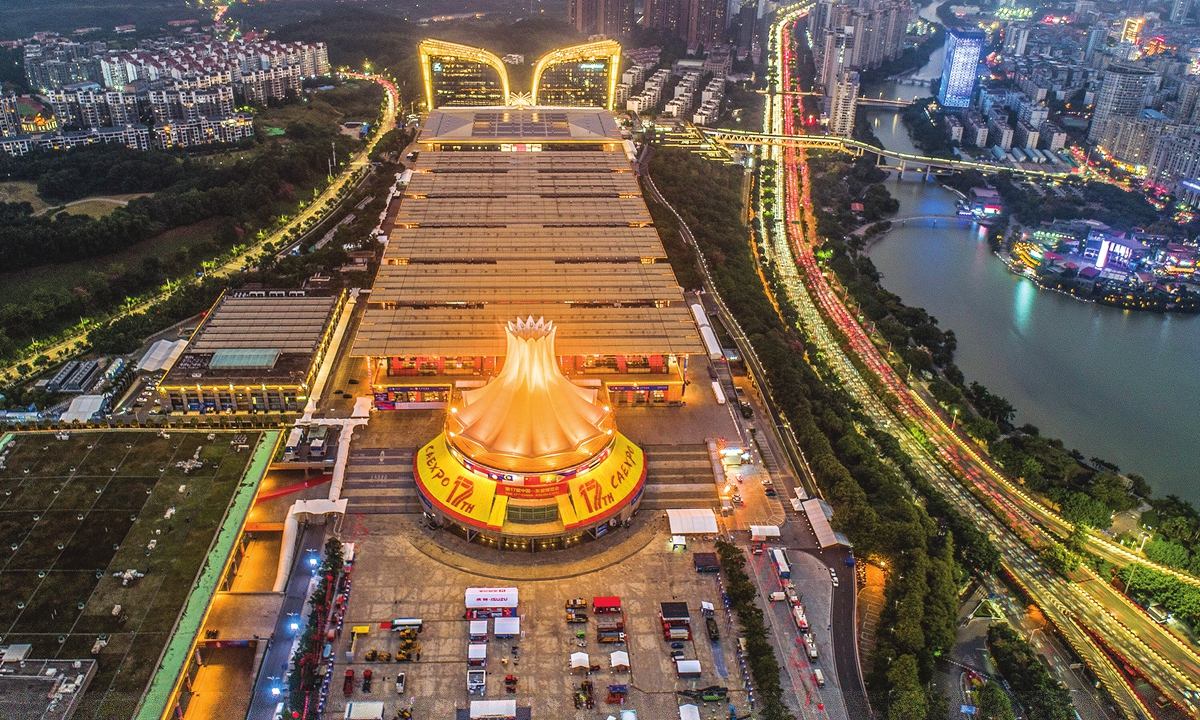
In Nanning, which is dubbed as a frontier for China-ASEAN cooperation, it is easy to see rambutan from Thailand and eggfruits from Myanmar when local residents walk into supermarkets.
The access to affordable tropical fruits is partly enabled by a booming trade between China and ASEAN since the signing of the China-ASEAN free trade agreement (FTA) in 2010. An upgraded protocol of the FTA was implemented in 2019.
In 2020, ASEAN took over the EU to become China’s largest trading partner. In the first 10 months of 2020, bilateral trade volume reached 3.79 trillion yuan, up 7 percent year-on-year. China’s investment in the bloc increased 70 percent in the first three quarters of 2020 from last year.
In addition to trade, another highlight of regional cooperation is infrastructure connectivity, which guarantees the free flow of goods even at the height of a pandemic.
So far, the Kunming-Bangkok Road, an important infrastructure project under the ASEAN framework and part of the Asian road network, has been running smoothly for more than a decade.
As China-ASEAN cooperation moves from the « golden era » to the « diamond decade, » what’s next for the two economies?
 TANIKO Madagascar