
slavery
UK cannot ignore calls for slavery reparations, says leading UN judge
Exclusive: Patrick Robinson says reparation for transatlantic slavery ‘is required by history and is required by law
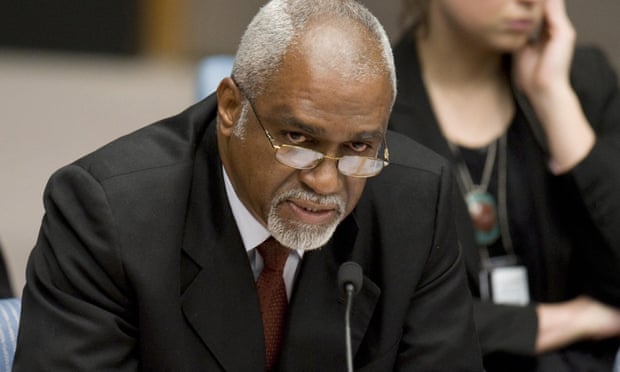
A leading judge at the international court of justice has said the UK will no longer be able to ignore the growing calls for reparation for transatlantic slavery.
Judge Patrick Robinson, who presided over the trial of the former Yugoslav president Slobodan Milošević, said the international tide on slavery reparations was quickly shifting and urged the UK to change its current position on the issue.
“They cannot continue to ignore the greatest atrocity, signifying man’s inhumanity to man. They cannot continue to ignore it. Reparations have been paid for other wrongs and obviously far more quickly, far more speedily than reparations for what I consider the greatest atrocity and crime in the history of mankind: transatlantic chattel slavery,” Robinson said.
“I believe that the United Kingdom will not be able to resist this movement towards the payment of reparations: it is required by history and it is required by law.”
Robinson spoke exclusively to the Guardian ahead of Unesco’s Day for Remembering the Transatlantic Slave Trade and Abolition. He is scheduled to make the keynote address on Wednesday at the London mayor’s office to mark the day.
The event follows the key role that Robinson played in writing and compiling the Brattle Group Report on Reparations for Transatlantic Chattel Slavery, which was published in June. The report, which has been described as the most comprehensive state-to-state reparations analysis, identifies the reparations that are due in respect of 31 countries in which transatlantic slavery was practised.
The study estimates that trillions of dollars are owed in reparations to countries affected by transatlantic slavery. The report, which was published by the University of the West Indies after a symposium held by the American Society of International Law, concludes that the UK alone is required to pay a sum of $24tn (£18.8tn) as reparations for transatlantic slavery in 14 countries. Of that sum, about $9.6tn is due to Jamaica. The report uses calculations made by the Brattle Group, which factors in the wealth and GDP amassed by countries that enslaved African people.
When asked if the high figures came as a surprise, Robinson said no. “These calculations are not over a period of five years or 10 years. They cover the entire duration of transatlantic chattel slavery, which means they cover hundreds of years. What is more, reparations have never been paid. So the calculations begin from day one of transatlantic chattel slavery, that is hundreds of years; and that alone explains the high figures.”
To address the figures, Robinson said the report proposed that payments be made over a longer period of time, between 10 and 25 years, rather than instantly.
UK government and royals called on to investigate slavery links after Guardian apology
UN experts lead calls for public and private bodies to take steps toward restorative justice
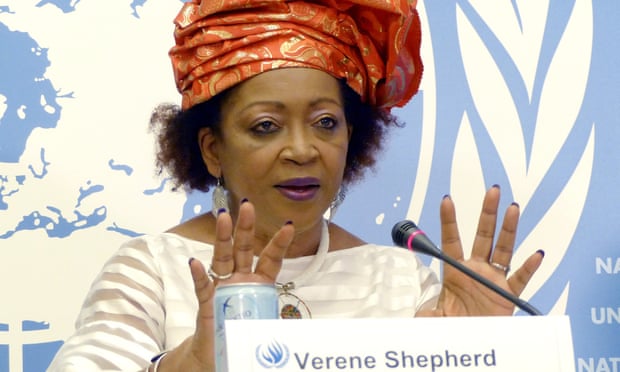
UN experts are leading calls for the British government and royal family to investigate their historical links to transatlantic slavery and take steps toward restorative justice.
The Scott Trust, which owns the Guardian, apologised on Tuesday for the role the newspaper’s founders had in transatlantic slavery and announced a decade-long multimillion-pound programme of restorative justice.
The independent academic research into the Guardian’s past and the programme of restorative justice have been welcomed by UN experts and campaigners, who have called for other institutions to follow suit.
Prof Verene A Shepherd, the chair of the UN committee on the elimination of racial discrimination and director for the Centre for Reparation Research at the University of the West Indies, said: “I have read with interest that the owner of the Guardian has issued an apology for the role the newspaper’s founders had in the transatlantic trafficking in enslaved peoples and announced a decade-long programme of restorative justice.
WHAT IS THE COTTON CAPITAL SERIES?
Cotton Capital explores how transatlantic slavery shaped the Guardian, Manchester, Britain and the world. Stemming from an investigation into the Guardian founders’ own links to slavery, this continuing series explores our history and its enduring legacies today.
Church of England announces £100m fund after slavery links
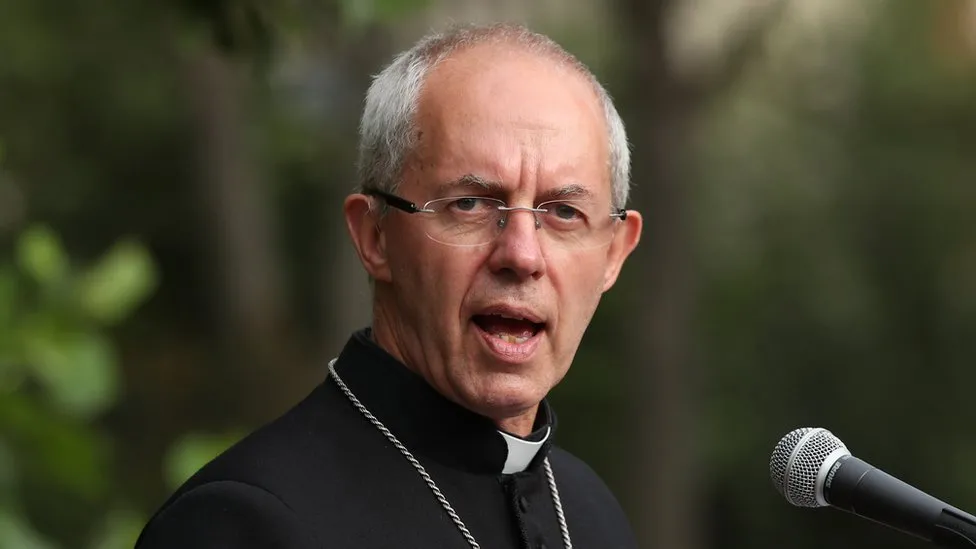
The Church of England is pledging £100m to « address past wrongs », after its investment fund was found to have historic links to slavery.
The funding will be used to provide a « better and fairer future for all, particularly for communities affected by historic slavery ».
A report last year found the Church had invested large amounts of money in a company that transported slaves.
Justin Welby said it was « time to take action to address our shameful past ».
The Archbishop of Canterbury previously called the report’s interim findings a « source of shame » in June 2022.
The investigation, which was initiated by the Church Commissioners, a charity managing the Church’s investment portfolio, looked into the Church’s investment fund, which back in the 18th century was known as Queen Anne’s Bounty.
It found that by 1777, Queen Anne’s Bounty had investments worth £406,942 (potentially equivalent to around £724m in today’s terms) in the South Sea Company.
The report estimated that the South Sea Company transported 34,000 slaves « in crowded, unsanitary, unsafe and inhumane conditions » during its 30 years of operation.
As a result, the Church Commissioners announced on Tuesday it was committing £100m over the next nine years to a new programme of investment, research and engagement.
It said it will also fund further research, including into the Church Commissioners’ history, to support dioceses, cathedrals and parishes to research and address their historic links with slavery.
Growth made on the fund will also be spent into grants for projects helping communities adversely impacted by historic slavery.
Mr Welby said: « The full report lays bare the links of the Church Commissioners’ predecessor fund with transatlantic chattel slavery.
« I am deeply sorry for these links.
« It is now time to take action to address our shameful past. »
The Bishop of Manchester, the Right Reverend Dr David Walker, deputy chairman of the Church Commissioners, also said he is also « deeply sorry » for the fund’s « shaming » historic links to the slave trade.
He added: « We hope this will create a lasting positive legacy, serving and enabling communities impacted by slavery. »
(source: bbc.com)
 TANIKO Madagascar