
South Africa
G20 adopts bold Declaration despite US boycott | Condemns territorial grabs, Tensions rise
The G20 summit witnesses a dramatic turn as member nations adopt a unified declaration condemning territorial grabs, even as the United States voices its objections and boycotts key parts of the agreement. Global leaders gathered to discuss critical issues including international security, economic growth, climate action, and geopolitical tensions.
Despite the US dissent, the declaration reflects growing consensus among G20 nations on defending sovereignty and international law. Analysts suggest this could mark a significant shift in global diplomatic alignments. Watch the latest updates from the G20 summit, including reactions from world leaders, expert commentary, and what this means for India’s role on the global stage. Stay informed on breaking developments, international diplomacy, and global power dynamics.
Full G20 Speeches: Modi, Meloni, Albanese, Carney, EU & World Leaders Address Climate, Energy
Ramaphosa’s Bold move: U.S. Envoy ‘Jr.’ Blocked amid diplomatic strains | G20 South Africa
In a significant diplomatic development, South African President Cyril Ramaphosa has blocked the appointment of the U.S. envoy referred to as ‘Jr.’ The move has sparked discussions on bilateral relations, diplomatic protocols, and South Africa’s foreign policy stance.
Chinese senior diplomat calls to resist Cold War mentality at BRICS security meetings
Global South urged to defend national security, promote building of multipolar world
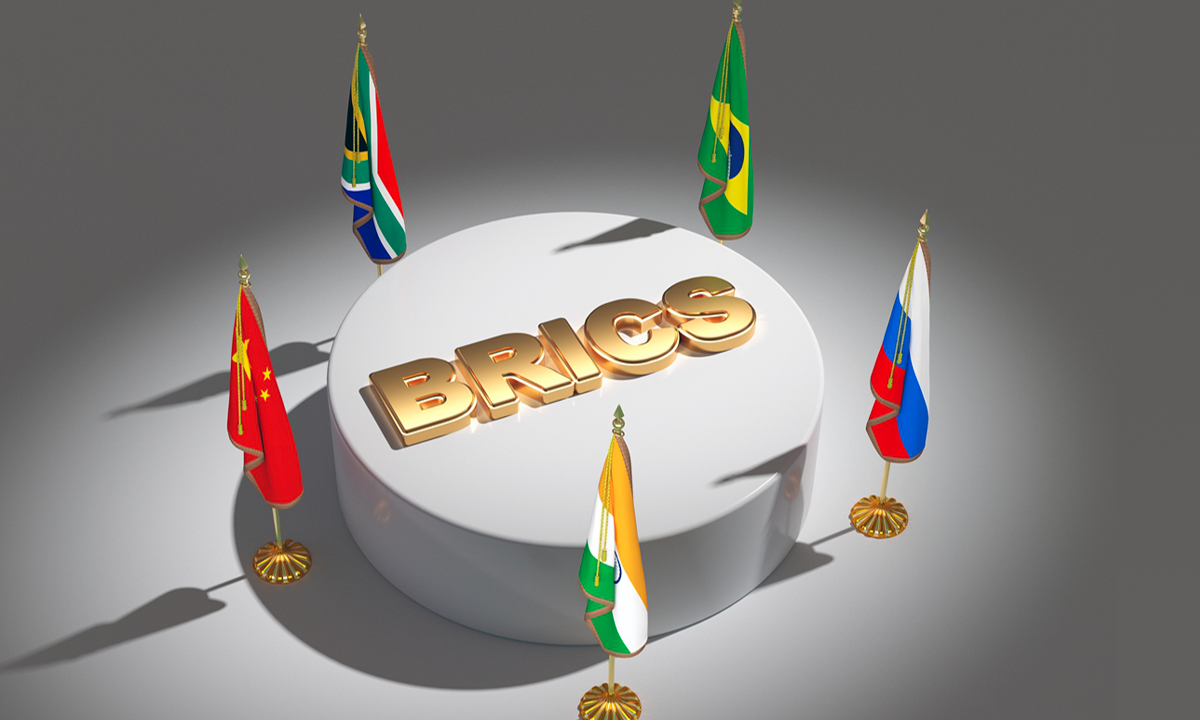
Cyber security as well as other threats in traditional and non-traditional security fields have taken the spotlight at the ongoing meetings of BRICS countries in Johannesburg, South Africa, as analysts said that amid growing global uncertainties, more developing countries are seeking to improve solidarity to jointly tackle challenges to their development under the auspices of the BRICS mechanism.
While attending the 13th Meeting of BRICS National Security Advisers and High Representatives on National Security in Johannesburg, South Africa on Tuesday, senior Chinese diplomat Wang Yi said that after more than 10 years of development, the BRICS has become an important platform for emerging market countries and developing countries to unite and self-development.
Under the new situation, we must grasp the future development direction of the BRICS countries, further strengthen political mutual trust and strategic coordination, continue to provide international public goods that meet the requirements of the times, and strive to translate the BRICS spirit of openness, inclusiveness, and win-win cooperation into practical actions, and polish the « golden brand » of BRICS cooperation, Wang said.
To deal with the current global security challenges and solve the security dilemma, Wang also called for countries to resist unilateralism, hegemony and oppose « decoupling » and « double standards » and oppose Cold War mentality and zero-sum game.
Analysts said that the ongoing meetings for security advisors and senior diplomats from BRICS countries and « Friends of BRICS » underscored the security concerns of developing countries and new emerging economies over the destructive activities, « color revolutions » and cyber attacks plotted by some countries who have posed great threats to the stable development of developing countries and global peace.
Aside from expressing their concerns over traditional and non-traditional security fields, BRICS countries and developing countries are seeking to improve solidarity to jointly tackle development challenges under the BRICS mechanism, which will also be part of the build-up to the 15th BRICS Summit in South Africa to be held from August 22 to 24, they noted.
On Monday, a meeting, which was held under the theme of « Cyber security is increasingly becoming a challenge for developing countries, » is also being attended by Minister in the Presidency of South Africa Khumbudzo Ntshavheni, Chief Adviser of the Presidency of Brazil Celso Luiz Nunes Amorim, Secretary of the Security Council of the Russian Federation Nikolai Patrushev, National Security Adviser Ajit Doval of India and representatives of Belarus, Iran, Saudi Arabia, Egypt, Burundi, the United Arab Emirates, Kazakhstan, Cuba and other countries.
Security concerns under spotlight
Covid-19: A worrisome new variant in South Africa

A new variant of the coronavirus, whose mutations show evidence of a “big jump in evolution,” is driving an increase in new Covid-19 infections in South Africa, health officials said yesterday. Scientists have so far detected 22 cases of the B1.1.529 variant in Gauteng Province, the country’s economic hub.
Botswana’s health ministry confirmed that four cases of the variant had been detected in people who were all fully vaccinated. All four were tested before planned travel. One sample was also detected in Hong Kong, carried by a traveler from South Africa, South African scientists said.
The variant is alarming because of the density of its mutations, raising fears that it could be highly contagious. Scientist still do not know how effective existing vaccines will be against it, as it shares similarities with the Lambda and Beta variants, both of which are associated with an innate evasion of immunity.
Naming rites: South African scientists will meet with the W.H.O. technical team today and assign a letter of the Greek alphabet to the variant.
Response:
Britain will temporarily ban flights from six African countries, including South Africa, as the British health authorities investigate the variant.
Here are the latest updates and maps of the pandemic.
(source: New York Times)
 TANIKO Madagascar