
Vient le tour d’Elon Musk, patron de Tesla et chargé de sabrer dans les dépenses gouvernementales, qui a expliqué, lors de la présentation des résultats trimestriels de Tesla, en fin d’après-midi, qu’il allait réduire sa présence au DOGE, le département des coupes budgétaires, dès le mois de mai. « La plus importante part du travail nécessaire (…), afin de remettre de l’ordre dans les finances publiques, est en grande partie terminée. Et je pense que, dès le début du mois prochain, le temps que j’y consacrerai diminuera considérablement », a affirmé M. Musk, ajoutant qu’il pensait y consacrer « un jour ou deux par semaine ». « A partir du mois prochain, je consacrerai tout mon temps à Tesla. »
Jerome Powell
L’administration Trump rétropédale face à la panique mondiale des marchés
Donald Trump, Elon Musk et le secrétaire au Trésor, Scott Bessent, font machine arrière sur le renvoi du patron de la Fed, le DOGE et les droits de douane chinois. Le but : rassurer les marchés et reconquérir les Américains mécontents des premiers mois de la gouvernance Trump, selon un sondage de la chaîne financière CNBC.
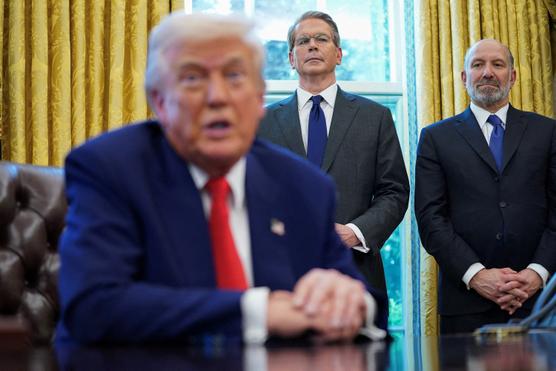
En plein chaos économique et financier, Donald Trump, Elon Musk et le secrétaire au Trésor, Scott Bessent – les trois figures de la politique économique américaine –, ont annoncé chacun une nouvelle, mardi 22 avril, attestant d’un léger retour à l’orthodoxie économique susceptible de requinquer les marchés financiers.
Le président américain a fait savoir qu’il n’avait pas l’intention de limoger Jerome Powell, le président de la Réserve fédérale (Fed) avant la fin de son mandat, en 2026, après l’en avoir menacé depuis quelques jours.
« Non, je n’ai aucune intention de le virer, a-t-il déclaré, après la cérémonie d’investiture de Paul Atkins à la présidence de la Securities and Exchange Commission (SEC). J’aimerais le voir se montrer un peu plus actif dans la mise en œuvre de son projet de baisse des taux d’intérêt. C’est le moment idéal pour baisser les taux d’intérêt. S’il ne le fait pas, est-ce la fin ? Non. Ce n’est pas la fin. »
Jerome Powell, le président de la FED dans le viseur de Donald Trump
Le torchon brûle entre Donald Trump et le président de la FED, Jerome Powell. Non content des annonces faites hier par l’institution américaine, Donald Trump veut le départ du directeur.
Fed Chief Powell Vows More Sharp Interest Rate Hikes — Even At Risk Of Recession
Federal Reserve Chair Jerome Powell delivered a stark message Friday: The Fed is determined to fight inflation with more sharp interest rate hikes, which will likely cause pain for Americans in the form of a weaker economy and job losses.
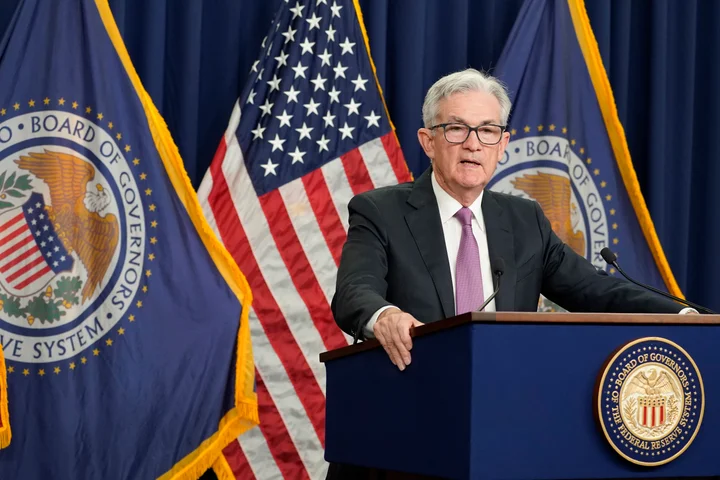
JACKSON HOLE, Wyoming (AP) — Federal Reserve Chair Jerome Powell delivered a stark message Friday: The Fed is determined to fight inflation with more sharp interest rate hikes, which will likely cause pain for Americans in the form of a weaker economy and job losses.
“These are the unfortunate costs of reducing inflation,” Powell said in a high-profile speech at the Fed’s annual economic symposium in Jackson Hole. “But a failure to restore price stability would mean far greater pain.”
Investors had been hoping for a signal from Powell that the Fed might soon moderate its rate increases later this year if inflation were to show further signs of easing. But the Fed chair indicated that that time may not be near.
Runaway price increases have soured most Americans on the economy, even as the unemployment rate has fallen to a half-century low of 3.5%. It has also created political risks for President Joe Biden and congressional Democrats in this fall’s elections, with Republicans denouncing Biden’s $1.9 trillion financial support package, approved last year, as having fueled inflation.
Stocks tumbled after Powell’s remarks, and bond yields rose, a sign that investors foresee more large interest rate hikes ahead. Some on Wall Street expect the economy to fall into recession later this year or early next year, after which they expect the Fed to reverse itself and reduce rates.
A number of Fed officials, though, have pushed back against that notion. Powell’s remarks suggested that the Fed is aiming to raise its benchmark rate — to about 3.75% to 4% by next year — yet not so high as to tank the economy, in hopes of slowing growth long enough to conquer high inflation.
US Federal Reserve makes emergency interest rate cut
The US Federal Reserve has slashed interest rates in an emergency move to protect the world’s largest economy from the coronavirus outbreak, ramping up the global response as the disease spreads.
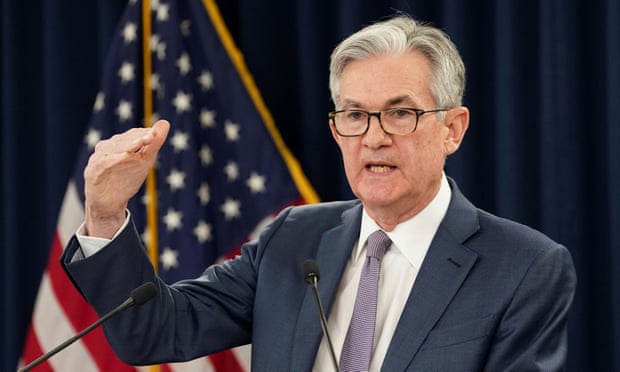
In a dramatic intervention as the G7 group of wealthy nations promised action around the world to protect jobs and growth amid the unfolding crisis, the US central bank said it was cutting interest rates by half a percentage point to a target range of 1% to 1.25%.
Launching the emergency measure as a pre-emptive strike to protect the US economy after pressure from Donald Trump to act, the Fed warned: “The fundamentals of the US economy remain strong. However, the coronavirus poses evolving risks to economic activity.”
Jerome Powell, its chair, said: “Of course the ultimate solutions to this challenge will come from others, particularly health professionals. We can and will do our part, however, to keep the US economy strong as we meet this challenge.”
As the economic costs mount in a pivotal US election year, Trump said the Fed had not cut rates enough and should go further. Powell insisted the emergency move was not in response to the president’s pressure. “We are never going to consider any political considerations whatsoever,” he said.
Trump a nommé Jerome Powell Président de la FED américaine
Il faisait figure de favori à la succession de Janet Yellen.
Sans surprise, Donald Trump a nommé jeudi 2 novembre Jerome Powell à la présidence de la Réserve fédérale, ou Fed, la banque centrale américaine. Il succédera à Janet Yellen, dont le mandat se termine en février prochain. Avec cette décision, le président des États-Unis fait le choix de la continuité de la politique monétaire.
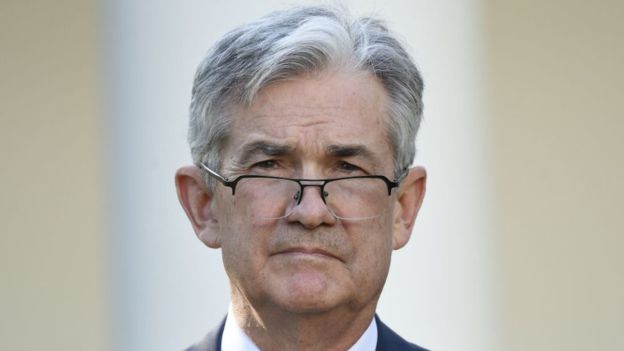
Jerome Powell, un républicain modéré qui siège au conseil (« board ») de la Fed depuis 2012, faisait figure de favori pour le poste et sa nomination n’a pas fait réagir les marchés, qui l’avaient largement anticipée.
Ce choix permet à Donald Trump d’imprimer sa marque à la tête de la banque centrale sans pour autant rompre avec la politique monétaire de Janet Yellen, qui est de sensibilité démocrate.
 TANIKO Madagascar