
usa
2012 Acrobatic Worlds – Lake Buena VISTA, USA – Women’s Group Final
Incredible performance of these talented Gymnasts.
Defending World Women’s Group champions Aigul Shaikhutdinova, Ekaterina Stroynova and Ekaterina Loginova of Russia were polished and powerful in every routine as they successfully held off the charge of Belgium’s Sanne Overberghe, Lara Schollier and Camille van Betsbrugge to win their second straight World title. Belarusian trio Yuliya Khrypach, Hanna Kobyzeva and Julia Kovalenko edged Poland to capture the bronze.
Mixed Pair Final
At their first World Championships, Belgian teenagers Nicolas Vleeshouwers and Laure de Pryck dazzled with dramatic, artistic and technically superior routines to take gold in the Mixed Pairs. At the other end of the spectrum, veteran Revaz Gurgenidze and partner Tatiana Okulova (RUS) showed classical, well rehersed work for silver while bronze medallists Denys Iasynskyi and Inna Batuyeva (UKR) overcame a mistake in prelims to finish third after two well-executed routines in finals.
US sanctions against Germany: How dangerous is Nord Stream 2?
The US is threatening Germany with crushing sanctions if it continues with the Nord Stream 2 gas pipeline. How bad are relations between the two sides?
Here are seven things, you probably didn’t know, that were connected to slavery


(CNN) As protesters across the United States continue calling for an end to police brutality and racial injustice, organizations are coming to terms with their racist histories.
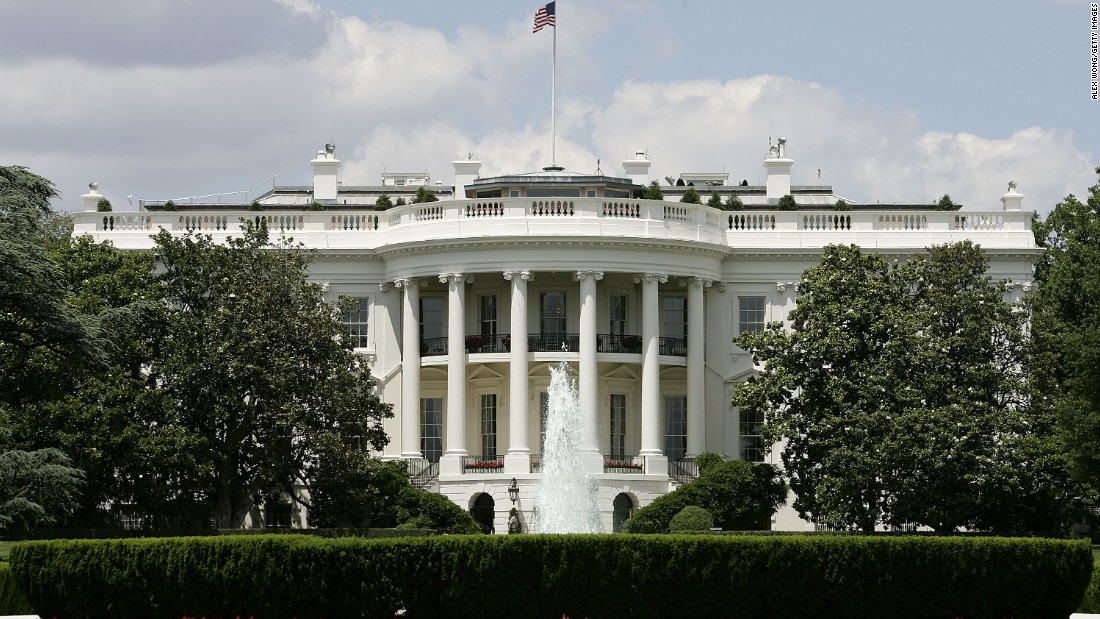
The White House and US Capitol Building
Global report: Fauci voices Covid-19 fears for Trump rally as São Paulo faces cemetery crisis
Rallies and protests present infection risk; Brazilian city to exhume bodies to free up more space; fresh domestic cases cause alarm in Beijing
Dr Anthony Fauci, a senior US infectious disease official, has warned of the dangers of holding Trump election rallies during the pandemic, adding that rising coronavirus hospitalisations in some states could get out of control unless robust contact-tracing regimes were in place.
Fauci warned there was a risk of either “acquiring or spreading” the virus for those who attend the president’s planned rally in Oklahoma next week, although he said he had not raised the issue with him.
(…)
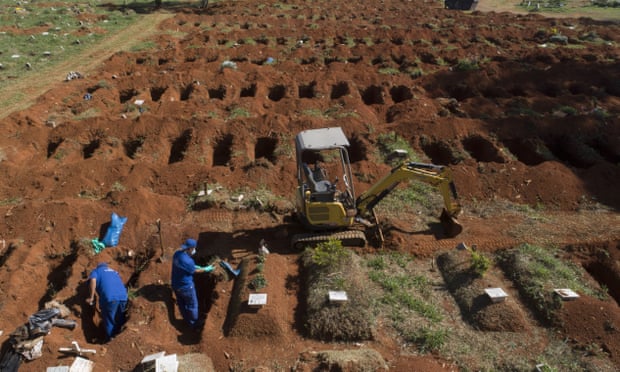
In Brazil, the city of São Paulo has said it will exhume bodies buried years ago and store their bagged remains in large metal containers in a bid to free up space during the crisis.
The municipal funeral service said in a statement on Friday the remains would be placed in numbered bags, then stored temporarily in 12 containers it has bought. The containers would be delivered to several cemeteries within 15 days.
The country marked a grim milestone the same day, overtaking the UK to become the country with the second-highest Covid-19 death toll in the world.
In Argentina, a pastor turned his church into a bar in protest at the uneven easing of restrictions in his Santa Fe province. Church leaders were dressed as waiters carrying Bibles on their trays in a mock service. Pastor Daniel Cattaneo said: “So, apart from the breaded veal headed for table four, here goes the word of God.”
India reported its biggest daily jump in cases on Saturday, adding 11,458 confirmed infections and taking the its total count to more than 300,000, according to data from the federal health ministry.
India is the fourth-worst affected country in the world, having passed the UK on Friday, with cases steadily increasingly despite a nationwide lockdown that began in late March and has since been loosened.
China reported 11 new cases on Saturday, including six domestic cases in the capital, Beijing, that raised concerns about a resurgence. Most of China’s cases in recent months have been overseas nationals tested as they returned home. The new cases have prompted Beijing officials to delay the return of students to primary schools and suspend all sporting events and group dining. City authorities on Friday also closed two markets visited by one of the known cases.
The first new case in Beijing after two months – who had no recent travel history outside the city – was reported on Thursday, and authorities confirmed two more infections the next day. The other five cases reported Saturday were brought in from overseas.
New Zealand has now gone for 22 days in a row without recording a new case. Following the recovery of an Auckland woman on Monday, it has no known active cases of Covid-19, and no one is in hospital with the virus.
China rivalry may put the U.S. back in the coup business
Washington – By all accounts, the U.S. government was not involved in the failed plot this month to overthrow President Nicolas Maduro in Venezuela. One would hope that the Central Intelligence Agency could do better than a farcical scheme that was disowned by the Venezuelan opposition, penetrated by regime security forces and disrupted as soon as it began.

Yet this trivial episode invites us to think seriously about the role of covert intervention and regime change in U.S. policy. Just as the United States sought to undermine or topple unfriendly regimes during the Cold War, it may look to such methods again in its increasingly heated rivalry with China. Caution will be necessary: History tells us that while covert intervention can sometimes be a cost-effective tool of competition, it is fraught with risks and profound moral trade-offs.
Covert action came of age during the Cold War. In the late 1940s, when the CIA and National Security Council were born, the U.S. began developing a global capability for intervention under the cloak of secrecy. Over the succeeding decades, it would seek to destabilize or replace numerous governments that were slipping into the Soviet sphere or softening up their countries for communist influence. Lire la suite »
US Federal Reserve makes emergency interest rate cut
The US Federal Reserve has slashed interest rates in an emergency move to protect the world’s largest economy from the coronavirus outbreak, ramping up the global response as the disease spreads.
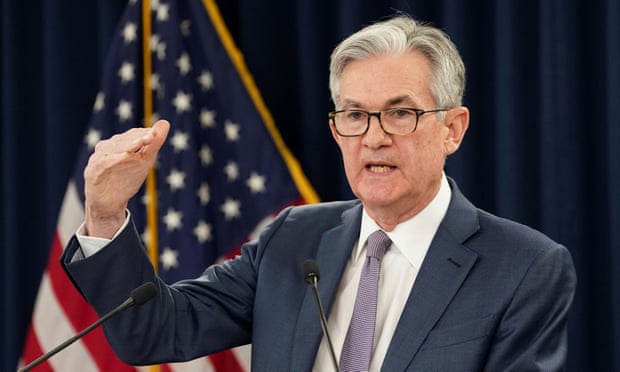
In a dramatic intervention as the G7 group of wealthy nations promised action around the world to protect jobs and growth amid the unfolding crisis, the US central bank said it was cutting interest rates by half a percentage point to a target range of 1% to 1.25%.
Launching the emergency measure as a pre-emptive strike to protect the US economy after pressure from Donald Trump to act, the Fed warned: “The fundamentals of the US economy remain strong. However, the coronavirus poses evolving risks to economic activity.”
Jerome Powell, its chair, said: “Of course the ultimate solutions to this challenge will come from others, particularly health professionals. We can and will do our part, however, to keep the US economy strong as we meet this challenge.”
As the economic costs mount in a pivotal US election year, Trump said the Fed had not cut rates enough and should go further. Powell insisted the emergency move was not in response to the president’s pressure. “We are never going to consider any political considerations whatsoever,” he said.
What to expect next week in Trump’s Senate impeachment trial
President Trump’s impeachment trial in the Senate will formally begin next week. CBS News’ Natalie Brand joined CBSN’s « Red and Blue » from Capitol Hill with what to expect from the trial.
Lev Parnas, the indicted associate of President Donald Trump’s personal attorney Rudy Giuliani, said that Trump was « aware of all my movements. »
President Trump fires John Bolton
Donald Trump used his now traditional method of mass communication, Twitter, to tell the world that he had parted company with his security adviser
John Bolton. Bolton hit back on the same social media site to say that he had actually offered to resign first. What isn’t in dispute is the fact that there were huge divisions within the Trump cabinet over plans to hold peace talks in the United States with the Taliban.
Intel Chair Schiff: Bolton Should Have Never Been National Security Advisor
House Intelligence Chairman Adam Schiff says that the newly-ousted John Bolton left several foreign policy matters, like Iran, most volatile. Schiff also discusses upcoming moves by the Judiciary Committee on impeachment.
Northeast Asia sees more consensus
An article published in Financial Times Chinese on July 29 said that US, Japan and South Korea are acting increasingly independently, while a trend of joint action is being frequently observed among China, Russia and North Korea. Thus, a conclusion is made in the article – balance of power in Northeast Asia is being reorganized.

Japan-South Korea disputes have not impacted the essence of the US-Japan-South Korea alliance. Japan-South Korea trade conflicts might somewhat influence the three countries’ cooperation, but their military alliance is still stable. Yet the US-Japan-South Korea alliance needs to be reshaped and transformed under new geopolitical and international conditions.
(…)
As long as the denuclearization of the Korean Peninsula is not realized, South Korea will remain dependent on the US in security and geopolitics. The General Security of Military Information Agreement (GSOMIA), a military intelligence-sharing pact between Japan and South Korea, is supposed to be renewed on August 24. This will be an important juncture. If any change occurs to the agreement, there might be a crack in the US-Japan-South Korea military alliance, even though it will not completely collapse.
Aux États-Unis, le nouveau Congrès s’élève contre le mur de Trump
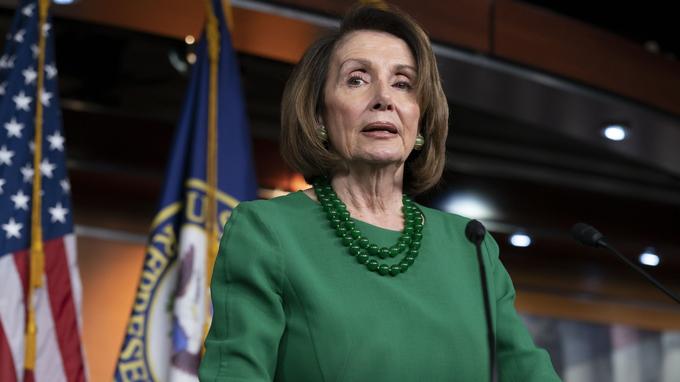
Le psychodrame dure depuis quinze jours. Faute d’accord politique sur le budget fédéral à cause d’une interminable querelle sur le renforcement de la sécurité frontalière et l’endiguement de l’immigration illégale, la paralysie des institutions gouvernementales («shutdown») se prolonge, propageant un vent d’inquiétude sur l’économie américaine.
D’un côté, le président américain Donald Trump arc-bouté sur son projet de «mur» avec le Mexique, cette promesse jetée en pâture à son noyau de fidèles ultraconservateurs, devenue l’alpha et l’oméga de son mandat. Il veut 5,6 milliards de dollars pour amorcer la pompe et ne signera aucun document tant que le Congrès n’aura pas accédé à ses exigences. De l’autre, l’opposition démocrate, victorieuse aux élections de mi-mandat («midterms») le 6 novembre, décidée à rendre coup pour coup au chef de l’État impopulaire et démagogue, et donc à ne pas céder un pouce de terrain sur la question du mur.
- ← Précédent
- 1
- 2
- 3
- 4
- Suivant →
 TANIKO Madagascar