

-

china

Brazil’s Lula says he will call India, China to discuss Trump tariffs with BRICS group: media report

Publié le

Brazil President Lula da Silva file photo: VCG

As US tariffs on Brazilian goods jumped to 50 percent on Wednesday, Brazil’s President Luiz Inacio Lula da Silva told Reuters in an interview that he saw no room for direct talks now with US President Donald Trump, which would otherwise likely be a « humiliation. »

Brazil is not about to announce reciprocal tariffs, he said. Nor will his government give up on cabinet-level talks. But Lula himself is in no rush to ring the White House, Reuters reported on Wednesday.

« The day my intuition says Trump is ready to talk, I won’t hesitate to call him, » Lula was quoted as saying in the Reuters’ interview from his presidential residence in Brasilia. « But today my intuition says he doesn’t want to talk. And I won’t humiliate myself. »

Lula also revealed in the interview with Reuters that he plans to call the leaders of India and China to discuss a joint BRICS response to tariffs on US imports imposed by Trump.

« What President Trump is doing is tacit — he wants to dismantle multilateralism, where agreements are made collectively within institutions, and replace it with unilateralism, where he negotiates one-on-one with other countries, » Lula said.

« I’m going to try to discuss with them about how each one is doing in this situation, what the implications are for each country, so we can make a decision, » he was quoted as saying in the Reuters’ report. « It’s important to remember that the BRICS have ten countries at the G20, » he added, referring to the group that gathers 20 of the world’s biggest economies, Reuters said.

Brazil requested consultations at the World Trade Organization (WTO) over 50 percent of tariff imposed by the US against the South American nation that went into effect on Wednesday, the AP reported.

« The US has flagrantly violated key commitments the country has agreed upon at the WTO, such as the principle of the most favored nation and tariff ceilings negotiated at that organization, » Brazil’s foreign ministry said in a statement, per the AP.

During a meeting of the Council for Sustainable Economic and Social Development held in Brasilia on Tuesday, Lula depicted the US trade move as « unjust » and highlighted Brazil’s progress on the international stage, the Xinhua News Agency reported.

Brazil will respond to a steep tariff increase imposed by the US with a contingency plan and take its case to the WTO, Lula said Tuesday, Xinhua said.

Brazil’s government estimates that 35.9 percent of the country’s goods shipped to the American market have been affected. That is about 4 percent of Brazil’s total exports, according to the AP.

Trump unveiled the current tariff rate on July 9, in a letter addressed to Lula and published online, the Al Jazeera said.

Unlike other tariff-related letters at the time, Trump used the correspondence to criticize the Brazilian government for its decision to prosecute Bolsonaro over an alleged coup attempt, according to the Al Jazeera.

(source: Global Times)

China uncertainty leads to new Christian crackdown, ‘Face recognition cameras’ in Churches

Publié le Mis à jour le

Rising economic pressures in China have led to a new wave of persecution against Christians.

The government is arresting pastors simply for collecting tithes and offerings, and foreign missionary activities are now restricted. However, despite the latest crackdown by Supreme Leader Xi Jinping, Christianity continues to spread throughout the country. China is experiencing social unrest due to a slowing economy, thanks in part to increased tariffs on exports to the U.S..

Chinese Defense Ministry spokesperson slams Japan’s new defense document, warns against Tokyo’s resurgence of militarism

Publié le Mis à jour le

Jiang Bin Photo: China’s Ministry of National Defense

In response to Japan’s recently released 2025 Defense of Japan pamphlet, which claimed China as an « unprecedented and the greatest strategic challenge, » falsely accused China of attempting « unilateral changes to the status quo by force, » and made inappropriate remarks on the Taiwan question, Chinese Defense Ministry spokesperson Jiang Bin said on Wednesday that Japan, in an attempt to find excuse for its military expansion, had fabricated false narratives, grossly hyped the « China threat, » and blatantly interfered in China’s internal affairs. China expresses strong dissatisfaction and firm opposition to this and has already lodged solemn representations with Japan.

Japanese militarism once inflicted profound suffering on China and other Asian neighbors. Instead of seriously reflecting on its past, Japan is once again showing dangerous tendencies toward military expansion – significantly increasing its defense budget, steadily loosening restrictions on arms exports, forming small military blocs to promote confrontation, and even suggesting revisions to its Three Non-Nuclear Principles. These actions gravely violate Japan’s Peace Constitution and its exclusively defense-oriented policy, severely undermine the post-war international order, and pose a serious challenge to peace and stability in the Asia-Pacific region. They have already triggered deep concern and heightened vigilance among neighboring Asian countries and the broader international community, Jiang said.

This year marks the 80th anniversary of the victory of the Chinese People’s War of Resistance Against Japanese Aggression and the World Anti-Fascist War, as well as the 80th anniversary of Taiwan’s recovery. The return of Taiwan to China in 1945 is an important part of the fruits of victory in World War II and the post-war international order. We urge Japan to profoundly learn from historical lessons, stop smearing and accusing China, earnestly abide by the spirit of the four China-Japan political documents and its commitments on the Taiwan question, and take concrete actions to promote the sound and stable development of China-Japan relations, the Chinese spokesperson said.

(source: Global Times)


Xi Jinping goes Missing: chinese Leader skips BRICS, absence signals power shift In China?

Publié le

Absence of Xi Jinping from public view for 2 weeks and during the upcoming BRICS summit has raised questions over the possible power shift in China. As per media reports, the unexplained absence, coupled with reduced media references of the Chinse President is leading to many speculations around his power hold and health.

Some reports also say that the Chinese President may be facing some critical illness due to which he is not being seen in public. Some reports also indicate that he is not being seen due to the internal party challenges, or being deliberately sidelined

Panama Shuts its Door to US and China: US Has to PAY for the CANAL! Leave One Belt One Road chinese program

Publié le Mis à jour le

In this video, we unravel the deepening standoff over the Panama Canal, a vital maritime passage connecting the Atlantic and Pacific Oceans. President Donald Trump’s push to reassert American dominance—and even take back the canal—clashes with Panamanian sovereignty and China’s infrastructure investments at its entrances. Meanwhile, Panama has exited the Belt and Road Initiative, sparking questions about Beijing’s next move. Will Washington’s demands for free passage, potential military options, or zero-fee transit push Panama or other global players over the edge? We examine how this strategic waterway might become the next great-power flashpoint, reverberating through global shipping lanes and economies from Australia to the Americas.

Trump’s Controversial Claims The U.S. President’s repeated allegations that “China operates the Panama Canal” and the vow to reclaim it if Panama refuses free passage. Panama’s firm denial of U.S. claims and stance on maintaining neutrality.

Panama’s Decision to Leave Belt & Road How Trump’s pressure led Panama to drop China’s ambitious infrastructure program. Frustration in Beijing and potential rethinking of Chinese investments in Latin America.

China’s Influence & Infrastructure Strategy Port facilities at both ends of the canal under Hong Kong–based companies. Fears that Beijing could exploit “dual-use” shipping hubs in a conflict scenario.

Historical Context & Treaty Obligations The 1977 Torrijos-Carter Treaties giving Panama sole control by 1999. U.S. retention of the right to intervene militarily should the canal’s neutrality be threatened.

Australia’s Concern & Global Shipping Routes Australia’s central bank citing higher shipping costs due to canal disruptions. Possible inflationary effects if maritime trade reroutes or if canal capacity narrows.

Possible U.S. Moves The unlikelihood—but not impossibility—of forceful U.S. takeover. Secretary of State Marco Rubio’s calls for Panama to curb Chinese power in the canal zone.

Balancing Sovereignty & Global Interests How Panama’s leadership—President Mulino especially—seeks new alliances but resists external interference. Will the canal stay open and neutral amid superpower rivalries?


Xi’s olive branch to Trump comes with warning on China red lines

Publié le Mis à jour le

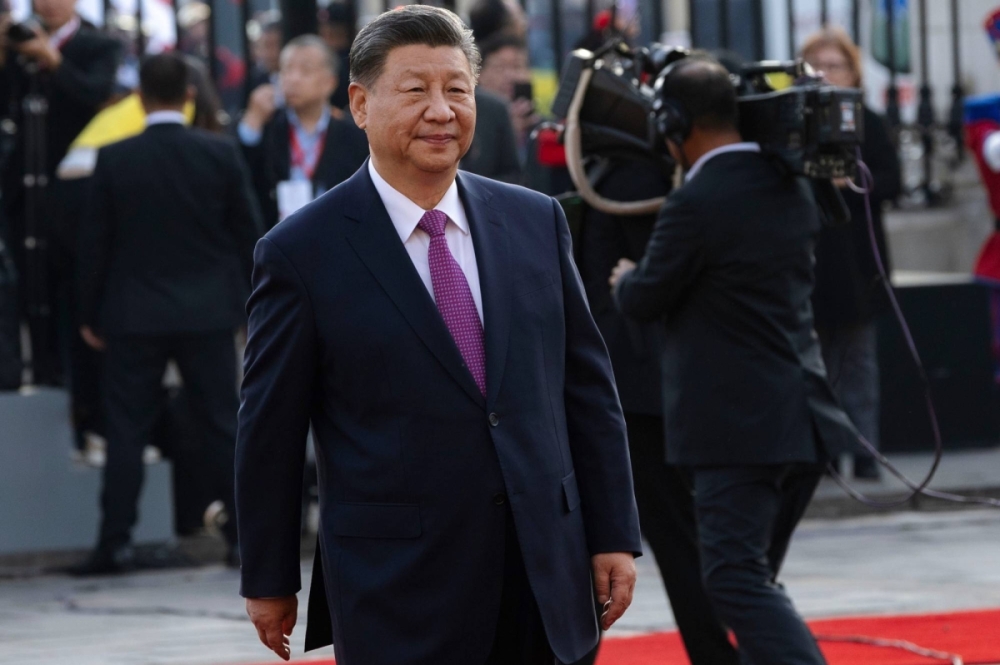
1 / 3 Chinese leader Xi Jinping arrives at the Government Palace in Lima during an Asia-Pacific Economic Cooperation summit on Thursday. | BLOOMBERG

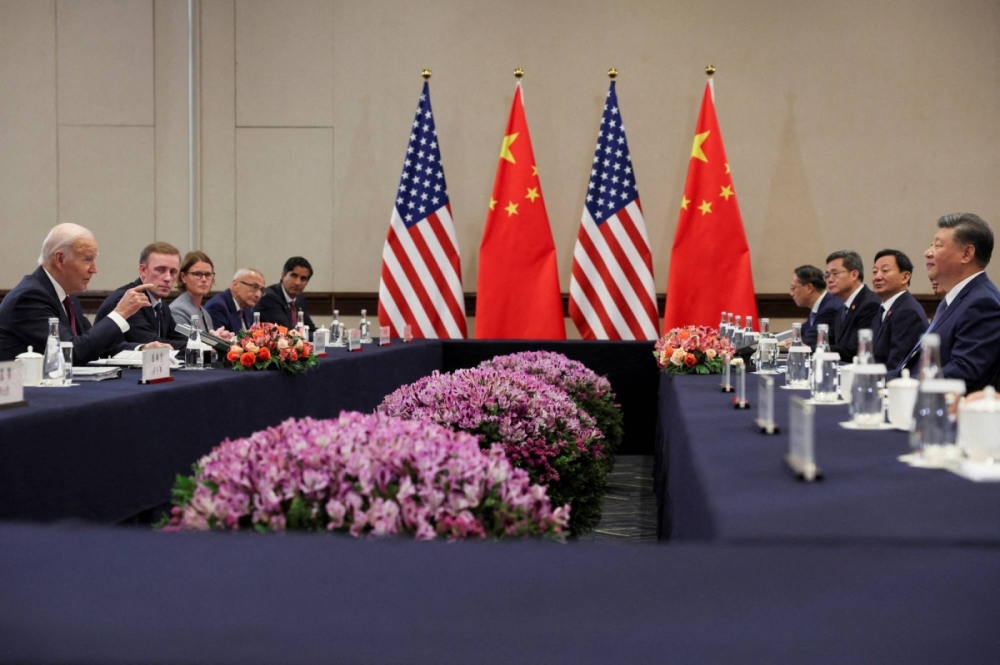
Chinese leader Xi Jinping has used his final meeting with U.S. President Joe Biden to send a clear message to President-elect Donald Trump: China wants to be friends, but is ready for a fight if necessary.

With Biden set to leave the White House in January, China’s leader took Saturday’s meeting as a chance to spell out his approach toward Trump. That entails finding a way for the world’s two biggest economies to get along, with Xi emphasizing that the U.S. and China shouldn’t fight a « new Cold War,” and a conflict between them isn’t inevitable.

But he followed that up by reiterating China’s « four red lines,” signaling that Trump must avoid any moves to undermine the Communist Party’s grip on power, push the nation toward democracy, contain its economic rise or encourage independence in Taiwan. Chinese state media, including CCTV, seized on the reference to « four red lines,” saying it set the agenda for the future relationship.

« They must not be challenged,” Xi said in a statement after the meeting with Biden in Lima, where both leaders attended an Asia-Pacific Economic Cooperation summit. « These are the most important guardrails and safety nets for China-U.S. relations.”

The lengthy statement from Xi after what was essentially a farewell chat with an outgoing U.S. president shows that China is hoping for the best while preparing for the worst. Trump has threatened to hit Beijing with tariffs of 60%, and tapped several hardliners on China to lead his foreign policy team — including Marco Rubio as secretary of state and Mike Waltz as national security advisor — suggesting no sensitive areas are off limits.

U.S. President Joe Biden speaks during a bilateral meeting with Xi on the sidelines of the APEC Summit in Lima on Saturday. | REUTERS

Lire la suite »

China, US militaries hold a new round of maritime military safety consultation in Hawaii, engage in candid and constructive exchange

Publié le Mis à jour le

China-US Graphic: GT

The Chinese and American militaries held two-day working-level talks in Hawaii, which China’s Ministry of National Defense (MOD) described on Saturday as candid and constructive. This marks the first time in two years that China and the US have held a meeting under the military maritime consultative mechanism, signaling the restart of the China-US military maritime security dialogue.

From Wednesday to Thursday, the militaries of the two sides held the China-US Military Maritime Consultative Agreement (MMCA) Working Group meeting in Hawaii, aiming to promote the healthy, stable, and sustainable development of military relations between the two nations, according to a readout released by the MOD.

Lire la suite »

Combating ETIM is China’s core concern in counter-terrorism and shared responsibility of intl community: FM

Publié le

Chinese Foreign Ministry spokesperson Wang Wenbin. Photo: VCG

The East Turkistan Islamic Movement (ETIM), a terrorist organization that has planned and carried out a series of violent terrorist attacks both inside and outside of China, has increased its connections with international and regional terrorist forces such as the Islamic State (IS) and Al-Qaeda, posing a serious threat to China’s overseas interests and the security and stability of relevant countries and regions, Chinese Foreign Ministry spokesperson Wang Wenbin said at a press conference on Thursday, stressing that combating ETIM is China’s core concern in counter-terrorism and shared responsibility of the international community.

Wang’s remarks came as Turkish authorities formally arrested 25 suspects in connection with the shooting of a man during a service at a church in Istanbul in January. One of the suspects was formerly a Chinese citizen but had obtained Turkish citizenship, with the suspect being identified as having links with ETIM and IS. Lire la suite »

Eyeing China, G7 calls for ‘immediate repeal’ of bans on Japanese food

Publié le

Trade minister Yasutoshi Nishimura (front right) speaks during a meeting of Group of Seven trade ministers in the city of Osaka on Saturday. | KYODO

The Group of Seven industrial powers called on Sunday for the « immediate repeal » of import curbs on Japanese food products, a reference to China’s restrictions after Japan began releasing wastewater from the wrecked Fukushima No. 1 nuclear power plant.

The G7 trade ministers, in a statement after a weekend meeting in Osaka, did not mention China but they also denounced what they consider its rising economic coercion through trade.

« We deplore actions to weaponize economic dependencies and commit to build on free, fair, and mutually beneficial economic and trade relationships, » the grouping said in a 10-page statement.

China slapped a blanket suspension of Japanese fish imports two months ago when Japan started the release of treated radioactive water from the Fukushima plant into the Pacific. While Japan and the U.S. have called the curbs unfair, Russia announced a similar restriction earlier this month.

The G7 — the United States, Japan, Germany, Britain, France, Italy and Canada — also expressed « concern » over recent control measures on the export of critical minerals.

China, the world’s top graphite producer, this month announced export curbs on some graphite products in another bid to control critical mineral supply in response to challenges over its global manufacturing dominance.

The ministers reaffirmed their concerns on « a wide and evolving range of non-market policies » that include « pervasive, opaque and trade-distortive industrial subsidies » and forced technology transfer.

On Russia, the G7 officials condemned its destruction of Ukrainian grain export infrastructure in its invasion of the country, and Moscow’s decision to « unilaterally » leave talks on an agreement that had allowed grain giant Ukraine to export wheat and other products through the Black Sea.

Unlike the G7 finance ministers’ meeting two weeks ago, which condemned « terror attacks » on Israel by Hamas, the trade ministers did not mention the Middle East crisis, saying only that they « seek to raise awareness about the challenges of moving humanitarian goods across international borders during natural disasters and other emergencies. »

Western countries have generally backed what they say is Israel’s right to self-defense, but there has been mounting international concern over the toll from Israel’s bombing and growing calls for a pause to allow aid to reach Palestinian civilians in Gaza.

(source: By Kantaro Komiya – Reuters)


US vows to support ‘free media’ in Pacific as concern over China influence grows

Publié le

Washington will look to partner with Pacific media sector, top official tells the Guardian

US under secretary for public diplomacy and public affairs Elizabeth Allen said Washington was ‘prioritising the support of independent media’ across the Pacific region Photograph: David Gray/REUTERS

Regional media has emerged as a new front in the contest between the US and China in the Pacific, as Washington said it will support “free media” while warning of the dangers of Beijing’s efforts to manipulate information around the world.

During a visit to countries in the Indo-Pacific in October, the US under secretary for public diplomacy and public affairs, Elizabeth Allen, said Washington was “prioritising the support of independent media” across the region.

Speaking to the Guardian in Sydney, Allen said the support would take “different forms’’ and the US would look to partner with media sectors in the Pacific.

“As part of advocating for a free and open Indo-Pacific, we are going to advocate for free media across the region,” she said, adding independent media is “critical to any democracy”.

“We’re certainly looking to partner with media sectors across the region, and giving them more support,” Allen said.

Her comments come amid a wider battle for influence between Washington and Beijing in the Pacific. The US has been criticised for being largely absent as a partner in the Pacific for decades, but in recent years it has significantly stepped up its presence, scrambling to open embassies and conducting high-level visits in the region.

The US already provides access to wire services such as Associated Press to newsrooms in several Pacific countries. Allen said the US would continue to look for opportunities to encourage independent journalism, which may include “how to create access outlets like AP, AFP wire services … to make sure that they’re getting access to objective editorially sound information.”

Allen’s visit follows rising anxiety about China’s ambitions in the Pacific. In 2022, Beijing rattled Western countries by securing a security pact with Solomon Islands. In May, the US struck a defence cooperation deal with Papua New Guinea, a country just north of Australia seen as strategically significant.

US president Joe Biden hosted Pacific leaders at a summit in Washington in September, pledging more aid to the region. Solomon Islands prime minister Manasseh Sogavare, now closely aligned with China, skipped the talks and said the US must change its strategy when it came to meeting Pacific leaders and stop “lecturing” them. China’s president Xi Jinping has argued his country’s outreach to Pacific countries is based on respect for those nations’ “sovereignty and independence”.

Shailendra Singh, head of journalism at the University of the South Prtyuacific, said the media was “central to the big power contest in the region.”

“All the countries jostling for influence are wooing the media, one way or another to win Pacific citizens’ hearts and minds because this can influence government decisions, at least to some extent,” Singh said.

Lire la suite »