
Paetongtarn Shinawatra
Thaïlande : Paetongtarn Shinawatra, jeune héritière d’une inamovible dynastie politique, accède au pouvoir
Celle dont le père, Thaksin, et la tante, Yingluck, ont tous les deux été chefs de gouvernement avant d’être évincés par l’armée, a été élue première ministre vendredi lors d’un vote au Parlement.
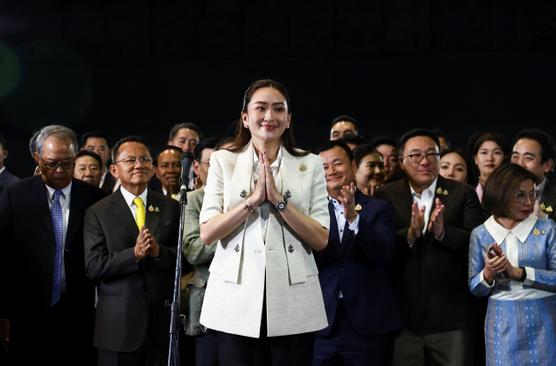
Le clan des Shinawatra est de retour au pouvoir à Bangkok. A l’issue d’un vote au Parlement, Paetongtarn – les Thaïlandais désignent leur politicien par leur prénom – a été élue à 37 ans, vendredi 16 août, à la magistrature suprême, par 319 voix sur 493, en remplacement du premier ministre Srettha Thavisin, destitué l’avant-veille. Mère de deux enfants, elle devient ainsi le plus jeune premier ministre de l’histoire de son pays et la seconde femme, après sa tante Yingluck, renversée par l’armée en 2014, à diriger un gouvernement du royaume.
Fille cadette du patriarche de la dynastie, Thaksin Shinawatra, lui aussi détrôné, en 2006, par un coup d’Etat militaire après cinq ans au pouvoir et rentré d’exil en août 2023, Paetongtarn est la présidente du Pheu Thai (Parti pour les Thaïlandais), le parti des Shinawatra. C’est donc le troisième membre de la famille à devenir premier ministre en vingt-quatre ans.
L’arrangement conclu permit alors le retour d’exil de Thaksin, installé à Dubaï depuis 2008 : un pardon royal lui fut accordé, réduisant à un an les huit ans de prison auxquels il avait précédemment été condamné par contumace dans diverses affaires de corruption. Imposer une Shinawatra au pouvoir aurait cependant été difficile dans la mesure où Thaksin purgeait encore sa peine. Ce dernier semblait en outre vouloir préserver sa fille pour le coup d’après, d’autant que Paetongtarn était perçue comme manquant de maturité et d’expérience.
Retour par procuration
Un an plus tard, le paysage politique est en pleine recomposition à la suite d’une double décision de la Cour constitutionnelle, une institution au service des forces les plus conservatrices du royaume et qui, depuis des décennies, impose ses diktats à la politique thaïlandaise. Elle a d’abord dissous, le 7 août, le parti Move Forward, arrivé en tête des élections de 2023, au motif que ce dernier avait fait campagne en faveur d’une réforme de la loi de lèse-majesté – critiquée par toutes les organisations de défense des droits de l’homme pour les abus et l’instrumentalisation auxquels elle donne lieu dans cette monarchie constitutionnelle où le roi dispose de pouvoirs importants.
(suite dans: lemonde.fr)
Exiled PM’s daughter determined to ‘seize the reins’ in Thai elections
Back on the campaign trail just days after giving birth, Paetongtarn Shinawatra is confident of a landslide victory.
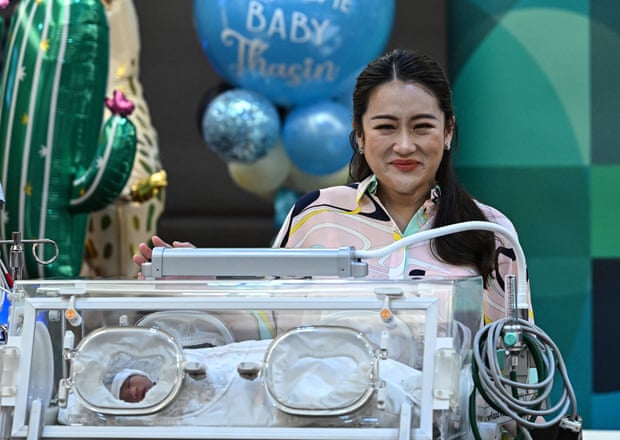
Paetongtarn Shinawatra’s face beamed from the side of a campaign truck as she addressed crowds of her supporters. “I am happy I have the chance to talk to you, Chiang Mai people,” she said last month. “It’s too bad I could not be there in person.”
Then eight-and-a-half months pregnant, Paetongtarn, 36, who is running to become Thailand’s next prime minister, has been unable to travel during the final leg of election campaigning. Instead, in a red jacket, the trademark colour of her Pheu Thai party, she video-called her supporters in Chiang Mai, in the north, from a hospital in Bangkok.
In front of her screen a row of supporters, who had turned out despite the baking heat, sat beneath a white marquee, sheltering from the sun.
Chiang Mai is the hometown of Paetongtarn’s father, ex-PM Thaksin Shinawatra – the country’s most popular politician, and its most polarising. He, and his sister, former prime minister Yingluck Shinawatra, were fiercely opposed by the royalist military establishment. He was ousted in a coup in 2006, and she was removed from office in 2014. Both live in exile to avoid legal cases.
“Just the word Chiang Mai is already enough to warm my heart,” Paetongtarn’s voice echoed from a speaker. “My father and my aunt were born there, and I miss them.”
As she held her hands to the camera in a love heart gesture, her audience, many of them the same age as her father, clapped and cheered.
Paetongtarn was a university student when a political crisis engulfed his premiership and divided the country. For rural voters in the north and the northeast, Thaksin, who first came to power in 2001, was a hero. He was the first politician to recognise their importance as voters, and offered policies such as universal health coverage that made a real difference to their lives.
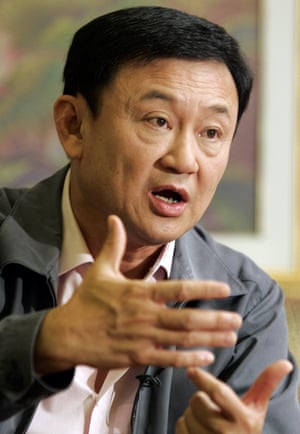
“In the old days we had a common saying – people would say they sold their rice field to receive medicine,” said Attachak Sattayanurak of Chiang Mai University’s department of history. Thaksin’s policies allowed people in rural areas the chance to climb the ladder, and they became far more politically engaged, he added: “He transformed Thai people into Thai citizens.”
But for royalist conservatives he was a corrupt businessman who exploited the country for his own gain, and whose popularity was a threat to the country’s monarchy.
At the peak of the crisis in 2006, Paetongtarn, known as Ung Ing, was studying at Chulalongkorn University in Bangkok, an elite, conservative institution. In her year group of about 200 political science students, there were perhaps 10 who sympathised with Thaksin, says one of her old university friends. In class, professors did not hide their dislike for her father. On the campus, students hung posters with Thaksin’s face crossed out; her friends tried to steer her away in the opposite direction, so that she wouldn’t have to walk past them. Lire la suite »
 TANIKO Madagascar