
usa
Sepp Blatter suggests fans should not travel to US for World Cup
- Ex-Fifa boss shows support for boycott calls
- Security concerns over tournament have risen

Former Fifa president Sepp Blatter on Monday suggested he supports fans boycotting World Cup matches in the United States this year due to security concerns.
Blatter gave his support to comments from Swiss anti-corruption lawyer Mark Pieth, who worked with Fifa on potential reforms when Blatter was president, saying fans should stay away from the US for the tournament.
“I think Mark Pieth is right to question this World Cup,” Blatter said on social media.
Pieth cited the killing of protester Renee Good by an American immigration agent in Minneapolis earlier this month as one reason for supporters not to travel to the US. Blatter’s endorsement of Pieth’s comments comes in the wake of the death of a second US citizen, Alex Pretti, last weekend.
The World Cup is due to be hosted by the US, Canada and Mexico from 11 June to 19 July.
“What we are seeing domestically – the marginalisation of political opponents, abuses by immigration services, et. – hardly encourages fans to go there,” Pieth said in an interview with Swiss daily Tages-Anzeiger last week.
“For fans, just one piece of advice: avoid the United States! You’ll get a better view on television anyway. Upon arrival, fans should expect that if they don’t behave properly with the authorities, they will be immediately sent home. If they’re lucky …”
Blatter stepped down as Fifa president in 2015 amid several scandals and was replaced by Gianni Infantino, who has forged close ties with Donald Trump.
Blatter and former Uefa chief Michel Platini were last year acquitted definitively on charges stemming from a delayed payment of 2m Swiss francs ($2.5m) Fifa made to Platini in 2011 for consultancy services.
Former France star Platini said earlier this month that Infantino has “become more of an autocrat” and “he likes the rich and power. (source: theguardian.com)
Can the Gaza peace plan move forward?

Can the Gaza peace plan move forward?
One of the hardest things about covering the war in Gaza is that Israel does not allow any journalists in, except when accompanied by the military. But my colleagues in the region have built up a wide network of sources on all sides.
My colleague Adam Rasgon in Tel Aviv told me about a recent meeting he had with Husam Badran, a senior Hamas official in Doha. Badran told him that Hamas was prepared to discuss the future of its weapons — but only in the context of “serious” talks about three other things: a full Israeli withdrawal from the Gaza Strip; a total end to Israel’s military operations in Gaza; and the establishment of a Palestinian state in the West Bank, Gaza and East Jerusalem.
Adam’s reporting shows just how complex the process of moving forward with peace is shaping up to be.
Katrin: It’s been two months since the cease-fire deal was signed. What still needs to happen to move forward?
Adam: Many things still need to happen. But at the moment, the U.S., along with other members of the international community, is trying to make progress on something called an International Stabilization Force. But it’s going slowly, and no country has publicly committed to sending forces.
What are the sticking points?
The hardest part is the question of Hamas’s weapons. Israel says Gaza needs to be totally demilitarized. The Trump peace plan says that, too. And Hamas has not publicly committed to that.
The Trump plan is effectively asking Hamas to surrender, and Hamas, at least so far, has not accepted that. They’ve given up some of their leverage. They gave up all the hostages and hostage bodies except one that they’re still looking for. But disarmament is a very hot-button issue for them.
What distinguishes Hamas in Palestinian politics is that they fight Israel with weapons. It’s what makes them different from the Palestinian Authority, the internationally backed government administering parts of the Israeli-occupied West Bank.
So in a sense, if it disarmed, Hamas would be giving up a core part of its ideology and identity. They also argue that there are people with grievances in Gaza who want to settle scores with them, so they need weapons for self-defense.
It’s a super complicated question. Lire la suite »
France’s Palestine gambit lauded by Arab Nations
Saudi Arabia, Qatar, and Kuwait have welcomed French President Emmanuel Macron’s decision to recognize the State of Palestine in September. Riyadh called it a “historic decision,” while Doha and Kuwait hailed it as a step toward justice and regional peace. The Gulf Cooperation Council (GCC), including UAE and Bahrain, backed the move despite their ties with Israel.
U.S., Israel condemn France’s move to recognize Palestinian state
President Trump confirms no US security guarantee for Ukraine
President Trump has confirmed that there will be no significant US security guarantee for Ukraine, despite agreement on a deal to exploit the country’s minerals.
Speaking at his first full cabinet meeting since re-taking the White House, Mr Trump said Europe, not the US must underwrite Ukraine’s future security. Mr Trump also confirmed the US was signing a “very big agreement” with Ukraine for access to its mineral resources. He said it would to amount to around $300 billion.
President Zelensky, who is due to fly to Washington on Friday, said that without security guarantees there would be no justice and no real ceasefire in Ukraine.
Panama Shuts its Door to US and China: US Has to PAY for the CANAL! Leave One Belt One Road chinese program
In this video, we unravel the deepening standoff over the Panama Canal, a vital maritime passage connecting the Atlantic and Pacific Oceans. President Donald Trump’s push to reassert American dominance—and even take back the canal—clashes with Panamanian sovereignty and China’s infrastructure investments at its entrances. Meanwhile, Panama has exited the Belt and Road Initiative, sparking questions about Beijing’s next move. Will Washington’s demands for free passage, potential military options, or zero-fee transit push Panama or other global players over the edge? We examine how this strategic waterway might become the next great-power flashpoint, reverberating through global shipping lanes and economies from Australia to the Americas.
Trump’s Controversial Claims The U.S. President’s repeated allegations that “China operates the Panama Canal” and the vow to reclaim it if Panama refuses free passage. Panama’s firm denial of U.S. claims and stance on maintaining neutrality.
Panama’s Decision to Leave Belt & Road How Trump’s pressure led Panama to drop China’s ambitious infrastructure program. Frustration in Beijing and potential rethinking of Chinese investments in Latin America.
China’s Influence & Infrastructure Strategy Port facilities at both ends of the canal under Hong Kong–based companies. Fears that Beijing could exploit “dual-use” shipping hubs in a conflict scenario.
Historical Context & Treaty Obligations The 1977 Torrijos-Carter Treaties giving Panama sole control by 1999. U.S. retention of the right to intervene militarily should the canal’s neutrality be threatened.
Australia’s Concern & Global Shipping Routes Australia’s central bank citing higher shipping costs due to canal disruptions. Possible inflationary effects if maritime trade reroutes or if canal capacity narrows.
Possible U.S. Moves The unlikelihood—but not impossibility—of forceful U.S. takeover. Secretary of State Marco Rubio’s calls for Panama to curb Chinese power in the canal zone.
Balancing Sovereignty & Global Interests How Panama’s leadership—President Mulino especially—seeks new alliances but resists external interference. Will the canal stay open and neutral amid superpower rivalries?
Midwest USA: Massive tornado outbreak reduced areas to rubble across multiple states
Dozens of tornado reports across multiple states put millions at risk since Friday. The severe storms stretched from Texas to Iowa, reducing areas to rubble. NBC News’ Jesse Kirsch reports from the devastation and ongoing cleanup efforts.
China, US militaries hold a new round of maritime military safety consultation in Hawaii, engage in candid and constructive exchange
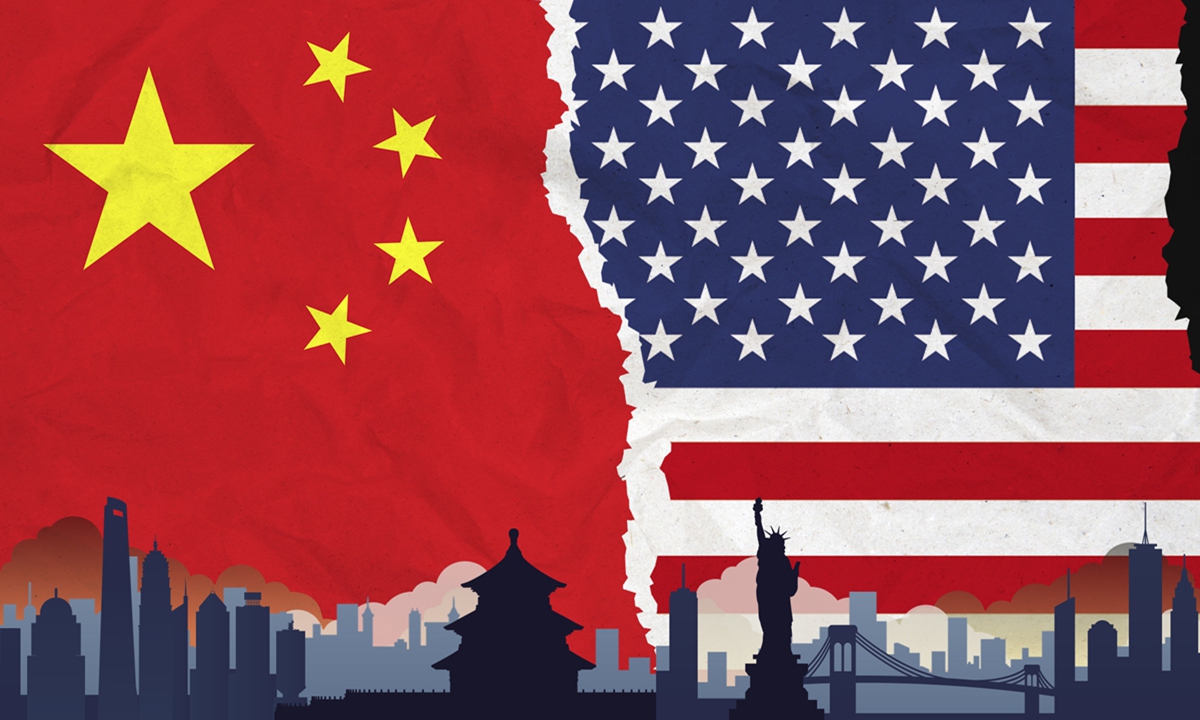
The Chinese and American militaries held two-day working-level talks in Hawaii, which China’s Ministry of National Defense (MOD) described on Saturday as candid and constructive. This marks the first time in two years that China and the US have held a meeting under the military maritime consultative mechanism, signaling the restart of the China-US military maritime security dialogue.
From Wednesday to Thursday, the militaries of the two sides held the China-US Military Maritime Consultative Agreement (MMCA) Working Group meeting in Hawaii, aiming to promote the healthy, stable, and sustainable development of military relations between the two nations, according to a readout released by the MOD.
Kenya-USA : Duale rencontre Austin pour raffermir le partenariat de défense
Austin a souligné lors de cette rencontre l’importance du partenariat de sécurité que les États-Unis et le Kenya partagent, ainsi que leur engagement en faveur de la paix et de la sécurité régionale.
« Nous avons eu des discussions formidables lors de mon voyage au Kenya, et je suis particulièrement fier du cadre de coopération en matière de défense que nous avons signé. Cela ne fait que souligner que le Kenya est depuis longtemps l’un de nos partenaires de sécurité les plus importants en Afrique. partenaire pour faire face à une série de menaces communes et faire progresser la sécurité en Afrique de l’Est et au-delà. Le soutien et le partenariat du Kenya dans la mission de transition de l’Union africaine en Somalie sont essentiels à la stabilité dans la région, tout comme votre engagement durable dans la lutte contre al-Shabab. » a déclaré Austin.
Le ministre de la Défense kényan Aden Bare Duale a fait écho aux éloges d’Austin pour la paix et la sécurité régionales, mettant en avant la qualité de la relation entre les deux pays et leur importance pour la région.
« Les relations de notre pays sont basées sur le principe de confiance mutuelle, de respect, de valeurs partagées et d’objectifs de défense communs. À cette fin, nous avons connu des succès remarquables dans les programmes avec lesquels nous avons collaboré au cours des dernières années. Permettez-moi de dire que les relations du Kenya, la stabilité et les emplacements stratégiques dans une région instable ont continué de présenter des opportunités idéales de partenariat avec les États-Unis afin de promouvoir la paix et la stabilité dans la région. »a estimé Duale.
Les États-Unis et le Kenya ont signé en septembre dernier un accord de coopération de cinq ans dans le secteur de la défense.
L’accord prévoit la formation des forces armées de Nairobi et la collaboration aux efforts de paix et de sécurité dans le pays.
(source: fr.euronews.com)
Washington donne son feu vert aux F-16 réclamés par la Turquie

Les États-Unis ont attendu que les instruments de ratification par Ankara de l’adhésion suédoise à l’Otan soient physiquement déposés à Washington, témoignant du caractère ultrasensible des négociations qui ont prévalu à cet accord.
Mettant fin à des mois de tractations, le gouvernement américain a donné vendredi 26 janvier son feu vert à la vente d’avions de chasse F-16 à la Turquie, ainsi que des F-35 à la Grèce, dans la foulée de la ratification par Ankara cette semaine de l’adhésion de la Suède à l’Otan. Le département d’État a formellement notifié, comme l’exige la loi américaine, le Congrès de cette double vente vendredi en fin de journée, a indiqué à des journalistes un responsable américain s’exprimant sous couvert d’anonymat.
Les États-Unis ont attendu pour ce faire que les instruments de ratification par la Turquie de l’adhésion suédoise à l’Otan soient physiquement déposés à Washington, a précisé ce responsable, témoignant du caractère ultrasensible des négociations qui ont prévalu à cet accord. En tant que dépositaires du Traité de l’Atlantique nord, tous les instruments de ratification doivent être déposés dans la capitale fédérale, qui accueillera en juillet un sommet pour les 75 ans de l’Alliance atlantique. La loi américaine exige par ailleurs que le Congrès soit notifié de toute vente d’armement américain à un gouvernement étranger.
Les États-Unis ont attendu pour ce faire que les instruments de ratification par la Turquie de l’adhésion suédoise à l’Otan
La Papouasie-Nouvelle Guinée a signé ce lundi un pacte de sécurité avec les États-Unis
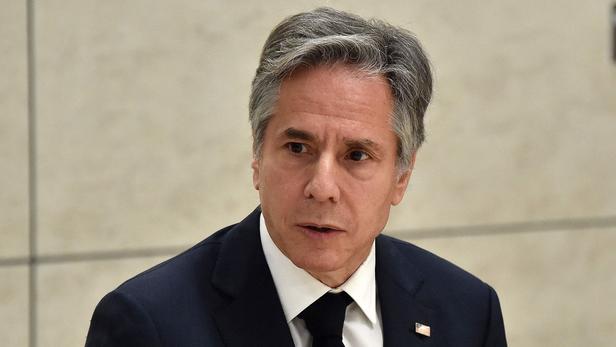
L’accord donnera accès aux ports et aéroports papouans-néo-guinéens aux forces américaines, à l’heure où Washington cherche à contrer l’influence grandissante de Pékin dans le Pacifique.
La Papouasie-Nouvelle Guinée a signé lundi 22 mai avec les États-Unis un pacte de sécurité qui donnera aux forces américaines un accès aux ports et aéroports de ce pays du Pacifique, où Washington cherche à contrer l’influence de la Chine.
Le secrétaire d’État américain Antony Blinken est en visite en Papouasie-Nouvelle Guinée pour la réunion du Forum États-Unis-Îles du Pacifique à Port Moresby, qui s’ouvre lundi.
Défense et surveillance maritime
En amont de cette réunion, Antony Blinken signera un accord de coopération dans le domaine de la défense et la surveillance maritime qui permettra aux troupes américaines d’accéder aux ports et aéroports du pays. Cet accord permettra «d’améliorer la coopération en matière de sécurité et de renforcer davantage nos relations bilatérales (…) et d’accroître la stabilité et la sécurité dans la région», a déclaré le département d’État américain.
Il donnera ainsi aux États-Unis un accès aux eaux de la Papouasie-Nouvelle Guinée près des routes maritimes vers l’Australie et le Japon, en échange d’un accès aux satellites de surveillance américains, avait expliqué jeudi le Premier ministre de Papouasie-Nouvelle Guinée, James Marape. Si ce pacte est présenté comme un accord visant à protéger les frontières du pays, les ambitions de la Chine dans le Pacifique sont une raison clé de l’engagement américain dans cette région, pointent les experts.
Voyage annulé
«Même si la Chine n’est mentionnée nulle part dans le document, elle est sous-jacente dans l’approfondissement des relations entre les États-Unis et la Papouasie-Nouvelle Guinée», analyse Gordon Peake, de l’Institut des États-Unis pour la paix. James Marape a toutefois précisé que cet accord ne l’empêcherait pas de conclure des alliances similaires avec d’autres pays, y compris la Chine.
Joe Biden, dont l’oncle a trouvé la mort en Papouasie-Nouvelle Guinée au cours de la Seconde Guerre mondiale, devait initialement devenir lundi le premier président américain à se rendre dans ce pays du Pacifique-Sud. Mais il a annulé son voyage en raison des négociations sur la dette publique des États-Unis, et s’est fait remplacer par Antony Blinken.
(source: lefigaro.fr)
 TANIKO Madagascar